


By Ewen Ling, Co-Founder, Referwo | Ecommerce Growth Strategist
Last updated: September 2026
The fastest way for an ecommerce brand to gain more followers on social media in 2026 is to put its products in front of audiences that already trust someone else. Collaborating with micro-influencers, reposting the content they create, and replying to every comment will grow a brand account faster than posting more often or stacking hashtags. Consistent, platform-native content keeps those new followers, and a clear path from follow to purchase turns them into customers.
Most brand accounts stall for the same reason. Their only source of discovery is their own posts, and those posts are shown mainly to people who already follow. Growth flattens at a few hundred followers and stays there. Influencer collaborations break that loop. Every creator who posts about your product introduces your handle to a new, pre-qualified audience, and the content they make gives your own feed a steady supply of social proof.
This guide rebuilds the usual follower-growth checklist for Australian ecommerce brands. It covers which platforms Australians actually use, how creator campaigns drive follows, what to post and when, where giveaways and paid social fit, and the compliance rules that can undo all of it. If you are a creator growing your own account, our influencer guide to getting more followers on Instagram is written for you.
Quick Answer
To gain more followers on social media, an ecommerce brand should partner with micro-influencers whose audiences match its customers, repost their content with credit, post platform-native content on a steady schedule, and reply to comments the same day. One gifted creator campaign run on Referwo reached more than 520,000 impressions. Avoid bought followers and undisclosed paid posts.
Key facts
- 98% of Australian adults used at least one social media or communication app in the six months to June 2025 (ACMA, 2026).
- Instagram use among Australian adults rose to 53% in 2025, up from 50% in 2024 (ACMA, 2026).
- 41% of Australians who use Instagram open it multiple times a day (ACMA, 2026).
- Engagement with sponsored posts rises, then falls, as an influencer’s follower count grows (Journal of Marketing, 2022).
- Thread the Word’s Referwo campaign: 174 creators, 480 pieces of content, 520,000+ impressions (Referwo case study).
What actually grows a brand’s follower count in 2026?
A brand’s follower count grows when new people see its content in a context they trust and are given a reason to come back. In 2026 that takes three levers working together: discovery through creators and shares, retention through consistent and useful content, and conversation through fast, human replies. Posting more often, on its own, moves none of them.
Discovery is the lever most brands underinvest in. Instagram, Facebook, and YouTube all recommend short-form video to people who do not yet follow an account, but a brand competes for that attention against every creator in its category. A creator’s audience, by contrast, has already chosen to listen to that person. When a trusted creator shows your product in use and tags your handle, a share of their audience taps through, checks your feed, and follows if what they find looks worth following.
That last condition matters. A creator campaign sends people to your profile, but your profile has to convert the visit. A clear bio that says what you sell and who it is for, a pinned post that shows the product in real use, and a feed stocked with customer and creator content all lift the share of visitors who follow.
Definition: follower growth rate
Follower growth rate is the net number of new followers gained in a period, divided by the followers you started with, multiplied by 100. A brand that grows from 2,000 to 2,300 followers in a month has a 15% monthly growth rate. Track it every month alongside reach, profile visits, and sales, not in isolation.
Follower count is a means, not the goal. A brand with 3,000 engaged local followers who buy will outperform a brand with 30,000 followers who never purchase. Every tactic in this guide is chosen because it grows the first kind of audience.
Which social media platforms should an Australian ecommerce brand prioritise?
Prioritise the platforms where your customers already spend time, then match the content format to each one. For most Australian ecommerce brands that means Instagram as the primary growth channel, Facebook for reach among older buyers and community groups, and Pinterest or YouTube for search-led discovery. The Australian Communications and Media Authority’s 2025 data shows Instagram use is still climbing.
According to the Australian Communications and Media Authority’s How we communicate report (ACMA, February 2026), 98% of Australian adults used at least one social media or communication app in the six months to June 2025, using an average of 5.5 platforms each. The table below shows how the main platforms compare and where each one fits in a follower-growth plan.
| Platform | Australian adults using it (6 months to June 2025) | Best follower-growth format for ecommerce brands |
|---|---|---|
| 78% | Community posts, local groups, and Reels shared from Instagram | |
| YouTube | 71% | Product tutorials, how-to videos, and Shorts |
| 53% (up from 50%) | Reels, collab posts with creators, and reposted customer content | |
| TikTok | 30% (up from 27%) | Short, entertaining videos; test creator content before building a brand channel |
| 20% (up from 17%) | Product pins that link straight to product pages | |
| Threads | 8% (up from 4%) | Conversational text posts; low competition for early brands |
Source: ACMA, Communications and media in Australia: How we communicate, February 2026.
Two details in the ACMA data matter for ecommerce brands. Instagram use among 35 to 44-year-olds rose to 63% in 2025, up from 57%, which puts a core buyer age group for many direct-to-consumer categories squarely on the platform. And 41% of Australians who use Instagram open it multiple times a day, so a brand that appears in their feed through creators gets repeated chances to be noticed.
The common failure is spreading thin. A small team that posts the same asset to six platforms gets average results on all of them. Pick one primary platform and one secondary platform, and customise each post for the format: vertical video with captions for Reels, a keyword-rich title for YouTube, a clean product image with a descriptive headline for Pinterest.

How do influencer collaborations help a brand gain followers?
Influencer collaborations put your brand in front of an audience that already trusts the creator, and every tag, mention, or collab post gives that audience a one-tap path to your profile. A single campaign with dozens of micro-influencers can introduce a brand to hundreds of thousands of relevant people within weeks, far faster than organic posting alone.
Creator size matters, but not in the way most brands assume. A Journal of Marketing study of 802 Instagram campaigns featuring more than 1,700 influencers found that engagement with sponsored content rises with follower count only up to a point, then declines (American Marketing Association, 2022). The researchers link the drop to weaker perceived relationships between very large creators and their followers. For a brand trying to earn follows, that points toward micro-influencers with close, active audiences. Our micro-influencer engagement analysis explains how to check a creator’s engagement before you invite them.
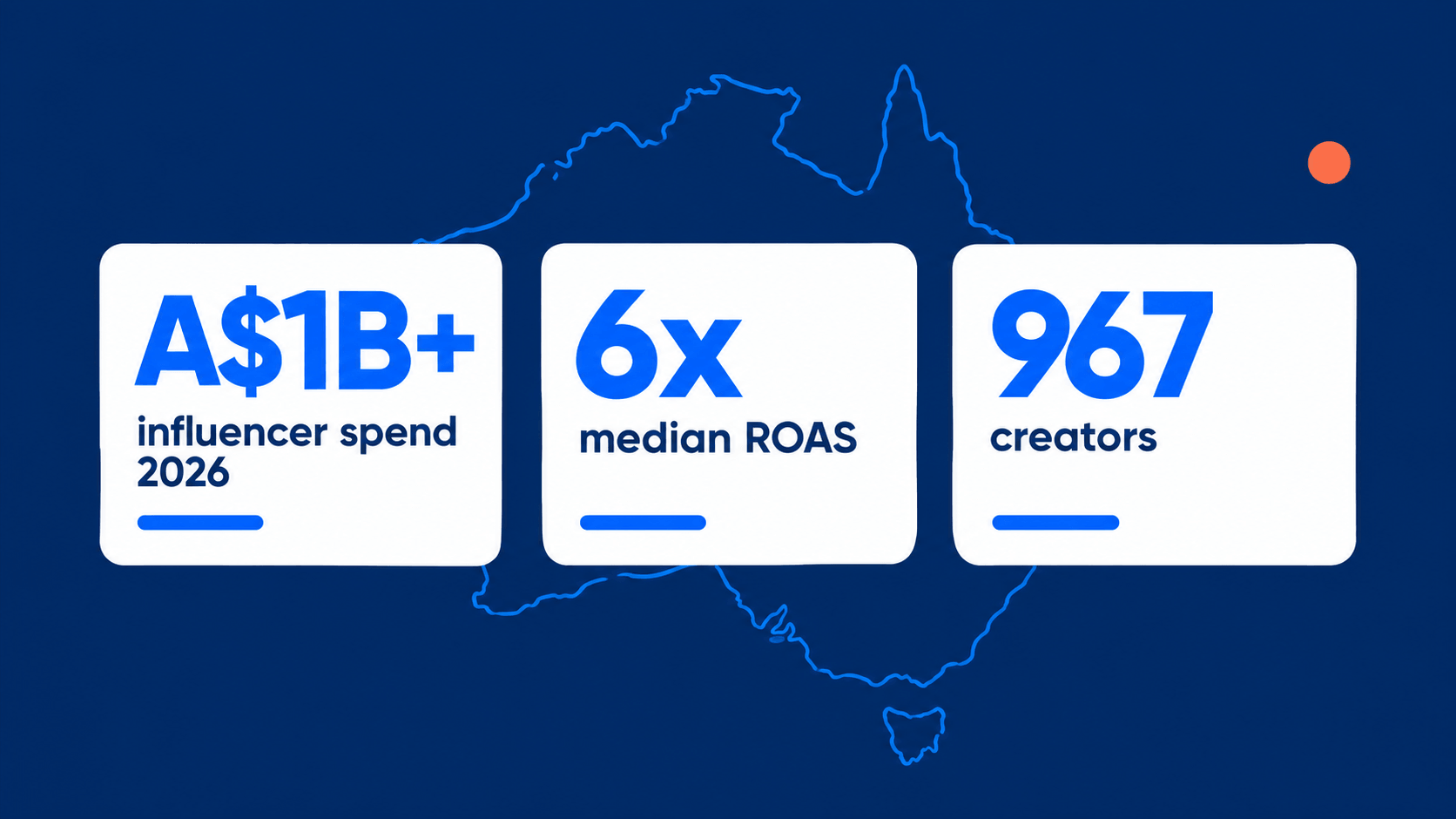
Referwo’s own case studies show what volume looks like in practice. Australian baby-gift brand Thread the Word ran a gifted campaign with 174 creators that produced 480 pieces of content and more than 520,000 impressions, with 185,000+ engagements. The brand then reposted the strongest creator content to build social proof on its own channels. Clean-beauty brand Zuluz Skincare worked with 209 creators to generate 304 pieces of content and more than 305,000 views.
A five-step creator campaign built for follower growth
- Define the follower you want. Write down the age range, location, and interests of your best customers, then shortlist creators whose audiences match that profile.
- Gift before you pay. Send a hero product to your first round of creators instead of paying per post. Our guide to gifted influencer campaigns in Australia covers product costs and expected outcomes.
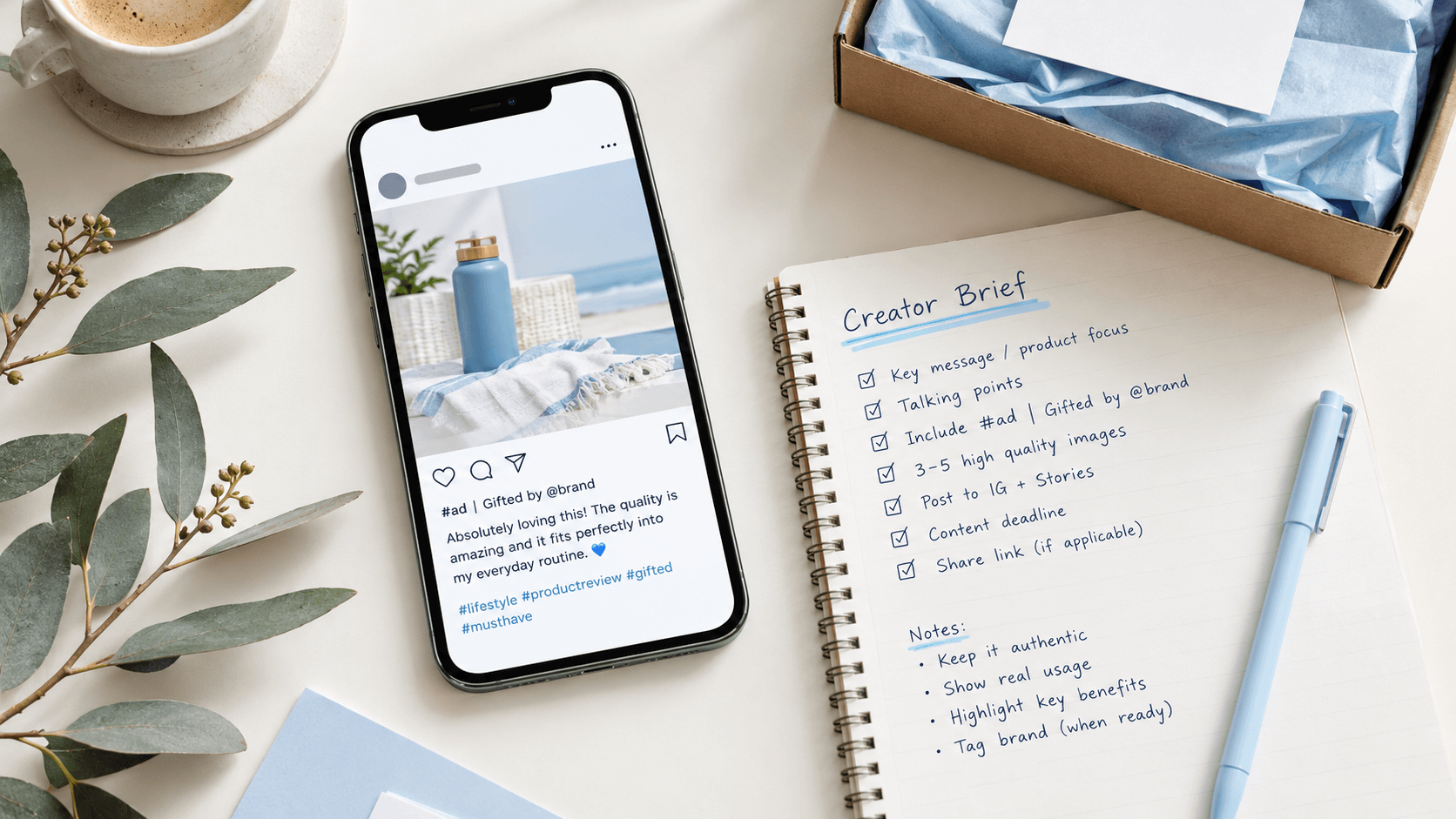
- Brief for follows, not just posts. Ask creators to tag your handle in the post and in stories, and to use Instagram’s collab post feature so the content appears on both profiles.
- Repost with credit. Share the best creator content on your feed and stories, credit the creator, and ask permission before using it in ads.
- Measure and re-invite. Track profile visits, follows, code redemptions, and sales for each creator, then build long-term partnerships with the ones who perform.
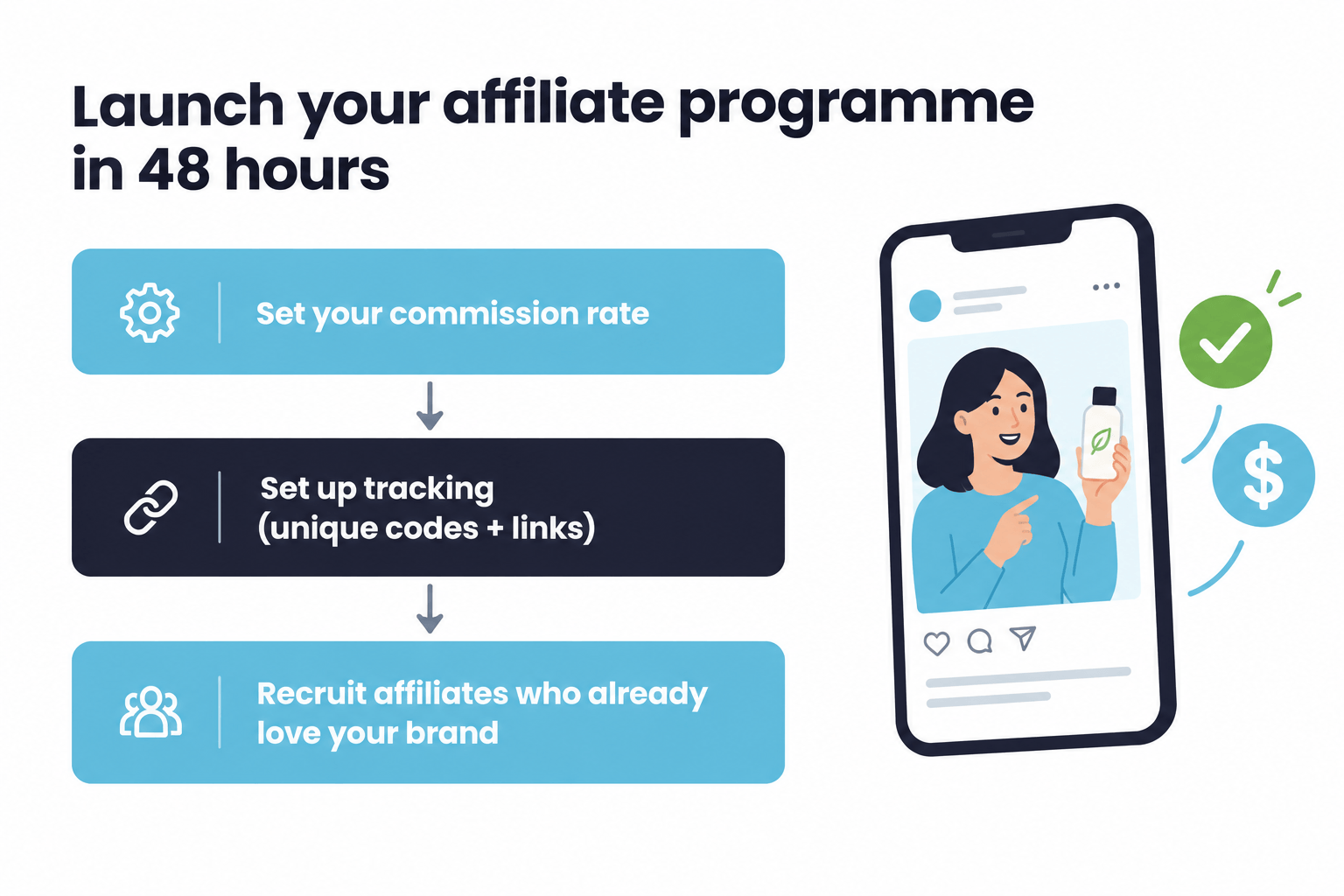
On Referwo, this workflow runs in one place. Creators from a network of more than 1,500 vetted influencers across Australia, New Zealand, and the US apply to your campaign rather than you chasing them. You approve the ones who fit, and each approved creator receives a unique discount code and tracking link automatically. Built-in reviews and a flag system keep creators accountable for posting what they agreed to.
Try it with your brand
Want creators applying to promote your products instead of cold outreach? See how Referwo runs gifted, affiliate, and paid campaigns for Australian ecommerce brands, with every post and sale tracked per creator. Plans start from USD 69 a month, with a 14-day free trial on the Basic and Standard plans.
How often and when should a brand post to gain followers?
Post on a schedule you can sustain for six months, because consistency beats short bursts of activity. A workable starting point for a small ecommerce brand is three to five feed posts a week on its primary platform, plus stories most days. Choose posting times from your own account insights, because your followers’ active hours matter more than any generic best-time chart.
Generic advice about posting at a set hour of the evening ignores the fact that every audience is different. A brand selling to shift workers, parents of newborns, or customers in Perth will see different peaks from a brand selling to Sydney office workers. Test two or three time slots for a month, compare reach and follows per post, and settle on the slots that win.
Where to find your best posting times
On Instagram, the professional dashboard shows the hours and days your followers are most active. On Facebook, Meta Business Suite insights show the same for your page. Review both monthly, because active times shift with seasons, school holidays, and sales periods such as Black Friday and end of financial year.
The harder problem for most brands is not timing but supply: finding enough good content to post consistently. Creator content solves it. Thread the Word’s 480 pieces of creator content would fill a five-posts-a-week calendar for roughly 96 weeks. A useful weekly mix combines product-in-use content from creators, behind-the-scenes posts from your team, short educational tips, and reposted customer photos. Our guide to harnessing user-generated content covers how to request and reuse it.
How do you turn new followers into an engaged community?
Followers stay when an account feels like a conversation rather than a catalogue. Reply to comments and messages the same day, ask questions customers genuinely want to answer, and feature real customers and creators in your content. ACMA found 82% of Australian adults used a social or communication app to actively engage with content in a given week, so the audience is willing to talk.
- Reply to every comment within the same day during your first six months of growth.
- Ask specific questions, such as which shade you should restock first, rather than asking followers what they think.
- Run polls and quizzes in stories to invite low-effort interaction.
- Feature a customer or creator post every week, with credit and a thank-you.
- Answer negative comments publicly, calmly, and quickly, then move the detail to direct messages.
Community also compounds. When followers see their own photos or comments featured, they are more likely to tag the brand again, which puts your handle in front of their friends. For more tactics, see five ways to engage followers on social media.
Do hashtags still help brands gain followers?
Hashtags still help people find content, but they now play a supporting role. Social platforms increasingly surface posts through keyword search and recommendations, so descriptive captions, on-screen text, and image alt text matter as much as tags. Use a small set of specific hashtags that describe the post, plus your branded hashtag, rather than long blocks of generic tags.
Write captions the way your customers would search: “sensory-friendly socks for kids” is more findable than a vague lifestyle line. A branded hashtag is still worth running, because it gives creators and customers one place to tag their content and gives you a ready library of posts to repost. Our guide to choosing the right hashtags covers how to research them.
Social content increasingly shows up beyond the platform itself. Google indexes public Instagram Reels, which means a well-captioned creator Reel can appear in search results for your product category. Our Instagram Reels optimisation guide explains how to caption for that. If you want your social content and product pages working together in Google and AI search results, Referwo’s sister agency Elinix AI covers ecommerce SEO and AI search optimisation.
Are giveaways and paid social worth it for follower growth?
Giveaways and paid social can both add followers quickly, but neither guarantees the right followers. A giveaway that asks people to follow and tag friends can attract prize hunters who unfollow once the draw closes. Paid social works best when it promotes your strongest creator content to audiences that resemble your customers, with engagement or sales as the objective, not follows alone.
A giveaway designed for quality followers uses your own product as the prize, so only people who want what you sell enter. Co-hosting it with two or three creators whose audiences match yours spreads it further than a brand-only post. Ask entrants to answer a question in the comments rather than tagging several friends, which gives you useful customer insight and cleaner engagement.
Giveaways in Australia are trade promotions, and the rules are set by each state and territory. South Australia, for example, requires a major trade promotion licence when the total prize value is over $5,000 (SA.GOV.AU, 2026). Check the rules in every state your giveaway is open to before launch, publish clear terms and conditions, and follow the platform’s own promotion guidelines.
For paid social, the most efficient approach is usually to run creator content as ads, often called partnership ads, from the creator’s handle. The content already looks native to the feed, and it carries the creator’s credibility. Brands that boost polished studio images to broad audiences tend to pay more for followers who engage less.
| Tactic | Speed of growth | Follower quality | Main risk |
|---|---|---|---|
| Creator collaborations | Fast | High, when audiences match | Poor creator fit wastes product |
| Giveaways | Very fast | Mixed | Prize hunters and state permit rules |
| Paid social with creator content | Fast | Medium to high | Costs rise without strong creative |
| Organic posting only | Slow | High | Growth plateaus without discovery |
| Buying followers | Instant | None | Damages engagement and trust |

How do you turn new followers into customers?
Followers become customers when every piece of content offers a low-friction next step. Give each creator a unique discount code, keep a shoppable link in your bio, and move engaged followers onto channels you own, such as email and SMS, where a platform’s algorithm cannot decide whether they see your message. Then measure which creators and posts actually drive sales.
Discount codes do more work than links on Instagram, because captions and feed posts do not allow clickable links. Most followers see a creator’s post, remember the code, and use it at checkout, which is how the sale is attributed back to that creator. On Referwo, creators add their Dealshub storefront to their link in bio so followers can see every code that creator holds and shop directly. Our guide to Shopify influencer discount codes covers how to set them up.
Owned channels protect the audience you have built. A welcome offer that turns a new follower into an email or SMS subscriber means you can reach that person on your own schedule. Brands that want this flow built properly can see how Elinix AI runs email and SMS marketing for ecommerce brands.
Measure the whole path, not only the top of it. Track follower growth rate, profile visits, link clicks, discount code redemptions, and revenue per creator each month. A creator who adds 50 followers and 30 sales is worth more than one who adds 500 followers and none.
What mistakes stop brands from gaining followers?
The mistakes that stall follower growth are usually shortcuts: buying followers, chasing celebrity reach, posting identical content everywhere, and hiding paid partnerships. Each one either weakens the engagement signals platforms use to recommend content or erodes trust with the audience, and the last one now carries financial penalties for Australian businesses.
- Buying followers. Fake or inactive followers never buy, drag down your engagement rate, and make the account look less credible to real customers and creators.
- Chasing the biggest creators. Large accounts cost more and, as the Journal of Marketing research shows, do not always deliver proportionally more engagement.
- Copy-pasting across platforms. A horizontal studio image looks out of place in a Reels feed and underperforms against native content.
- Hiding paid or gifted partnerships. Undisclosed creator posts break Australian Consumer Law and damage trust when followers find out.
- Quitting too early. Follower growth compounds, and most brands stop before creator content and community effects build up.
Disclosure deserves particular attention. When the ACCC reviewed 118 influencers in its 2023 sweep, 81% were making posts that raised concerns about potentially misleading advertising (ACCC, 2023). In March 2026, online retailer PhotobookShop paid $39,600 in penalties after two ACCC infringement notices, including for instructing influencers on 107 occasions not to disclose gifted products (ACCC, 2026). Gifted products count as payment, so every creator post you commission should carry a clear label such as Instagram’s Paid partnership tag or #ad.
Frequently asked questions
How can a small ecommerce brand gain followers on social media quickly?
The quickest reliable route is a gifted micro-influencer campaign. Send your hero product to 20 to 50 creators whose audiences match your customers, ask them to tag your handle and use collab posts, then repost their content with credit. Each post introduces your brand to a new, relevant audience, which grows followers faster than posting more often on your own account.
Is it worth buying followers for a brand account?
No. Bought followers do not buy products, do not engage, and lower your engagement rate, which tells platforms your content is less interesting. They also make your account look less credible to the creators and customers who compare your follower count with your likes and comments. Put the same budget into gifting product to real creators instead.
Do micro-influencers grow a brand account better than big influencers?
Usually, yes, when engagement is the goal. A Journal of Marketing study of 802 Instagram campaigns found engagement with sponsored posts rises with follower count only up to a point, then falls. Micro-influencers tend to have closer relationships with their audiences, so their recommendations prompt more profile visits and follows per dollar spent.
Do gifted influencer posts need to be disclosed in Australia?
Yes. The ACCC treats free gifted products as a form of payment. If a creator receives your product in exchange for content, the post must clearly disclose the commercial relationship, for example with Instagram’s Paid partnership label or a clear #ad or #gifted tag at the start of the caption. In March 2026 an Australian brand paid $39,600 in penalties over undisclosed gifted reviews.
How many hashtags should a brand use on Instagram?
Use a small set of specific hashtags that genuinely describe the post, typically three to five plus your branded hashtag. Descriptive captions, on-screen text, and keywords now do much of the discovery work that hashtags used to do, so write captions the way your customers would search for the product.
Does a social media giveaway need a permit in Australia?
It depends on where entrants live and how winners are chosen. Trade promotion rules are set by each state and territory. For example, South Australia requires a major trade promotion licence when the total prize value is over $5,000. Check the rules in every state your giveaway is open to, and follow the platform’s promotion rules as well.
How does Referwo help brands gain more followers?
Referwo connects ecommerce brands with more than 1,500 vetted creators across Australia, New Zealand, and the US. Creators apply to your gifted, affiliate, or paid campaign, you approve them, and each receives a unique discount code and tracking link. The dashboard shows every post, click, and sale per creator, and gives you a steady supply of creator content to repost.
The bottom line
Gaining followers on social media is no longer a posting-volume game for ecommerce brands. The accounts that grow fastest borrow trust from creators whose audiences match their customers, keep those new followers with consistent, native content and real conversation, and give every follower a simple path to buy. Get disclosure right from day one and the growth you build will hold.
If you want creators applying to promote your products, with every post, code, and sale tracked in one dashboard, see how Referwo helps Australian brands grow with influencer marketing. Most brands have their first campaign live within 48 hours.
Sources
- Australian Communications and Media Authority, Communications and media in Australia: How we communicate (February 2026)
- American Marketing Association, Finding Goldilocks Influencers, Journal of Marketing research summary (2022)
- ACCC, Scrutiny of influencers and businesses for misleading advertising and online reviews continues (December 2023)
- ACCC, PhotobookShop pays penalties for influencer reviews (March 2026)
- SA.GOV.AU, Trade promotions for businesses (2026)
About the author: Ewen Ling is the co-founder of Referwo and an ecommerce entrepreneur with 16 years of hands-on experience. He co-founded Elinz Electronics in 2005 and scaled it into a fully operational business before managing a successful exit for shareholders in 2021. At Referwo, Ewen helps ecommerce brands build influencer marketing programmes that generate measurable revenue, not just reach.