




By Ewen Ling, Co-Founder, Referwo | Ecommerce Growth Strategist
Last updated: September 2026
Not every influencer will drive results for your brand – and in 2026, the gap between great creators and average ones has never been wider. With AI-generated content flooding social platforms and follower counts easier to inflate than ever, knowing what genuinely makes a good influencer is the most important filtering skill a brand can develop. The qualities that matter most aren’t visible on a profile page. They show up in engagement patterns, content history, communication style, and whether the creator has ever actually moved product for a brand like yours.
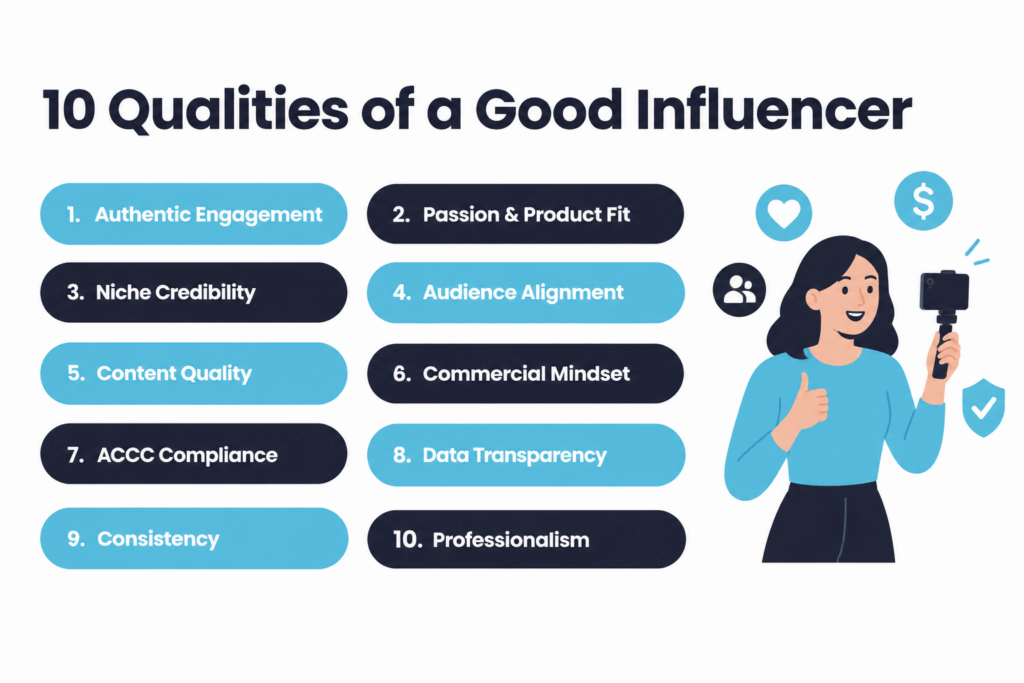
This guide covers the 10 qualities that separate high-performing influencers from those who look good on paper but deliver little in practice – written for Australian ecommerce brands evaluating creators for gifted, affiliate, or paid campaigns.
Quick Answer
A good influencer has authentic audience engagement, genuine passion for your product category, content quality suited to short-form platforms like Instagram Reels and TikTok, and the professionalism to deliver what they agreed to. For Australian brands, add one more: ACCC-compliant disclosure habits and a willingness to share post-campaign data. Follower count alone tells you almost nothing.
1. Authentic Engagement – The Number That Actually Matters
Follower count is a vanity metric. Engagement rate is the signal that tells you whether a creator’s audience actually cares what they say. A creator with 12,000 highly engaged followers in your exact niche will consistently outperform one with 500,000 passive followers who scroll past their content.
When reviewing a creator, look at genuine engagement: comments that reference the specific post content, saves and shares (not just likes), and consistent interaction across multiple posts – not just one viral outlier. Benchmark engagement rates vary by platform and tier:
| Creator Tier | TikTok | YouTube | |
|---|---|---|---|
| Nano (1K–10K) | 5–8% | 8–12% | 3–5% |
| Micro (10K–100K) | 3–6% | 6–10% | 2–4% |
| Macro (100K–1M) | 1–3% | 3–6% | 1–2% |
| Mega (1M+) | 0.5–1.5% | 1–3% | 0.5–1% |
For most Australian ecommerce brands, micro and nano-influencers deliver the strongest return – their audiences are tighter, more trusting, and more likely to act on a recommendation.
2. Genuine Passion and Product Fit
The single most reliable predictor of campaign success isn’t reach, aesthetics, or even engagement rate – it’s whether the creator genuinely cares about your product category. An influencer who already buys products like yours, talks about this space unprompted, and has an audience that shares those interests will always outperform a creator who is simply completing a brief.
This is the core logic behind gifted influencer campaigns: when the product genuinely fits the creator’s life, the content feels natural rather than sponsored, and audiences respond accordingly. Before reaching out to a creator, spend five minutes scrolling their content – not looking for polish, but looking for evidence that they actually live in your brand’s world.
3. Niche Credibility and Expertise
A good influencer has built genuine authority in a specific space. Their audience follows them because they know their subject – whether that’s sustainable living, baby nutrition, fitness training, or pet care – and trusts their opinion enough to act on it. This credibility is built over time through consistent, informed content and honest reviews, including when something doesn’t work.
Credibility is also what separates product recommendations that convert from those that get ignored. When an audience trusts a creator’s expertise, a recommendation functions more like advice from a knowledgeable friend than an advertisement. That trust takes years to build and seconds to lose – which is why credible creators are selective about what they promote. If a creator says yes to everything, that’s a warning sign.
4. Audience Alignment With Your Target Customer
Even the most engaging creator won’t deliver results if their audience isn’t your customer. Before committing to any partnership, verify the creator’s audience demographics: age range, gender split, location (particularly important for Australian brands – you want AU-based followers, not a majority overseas), and key interests.
A creator who shares your brand’s audience profile will produce content that resonates without you having to engineer it. Ask for an audience insights screenshot before any paid engagement, and look specifically at the percentage of Australian followers. For domestic ecommerce brands, a creator with 80% overseas followers is essentially marketing to people who can’t easily buy from you.
5. Content Quality and Platform Literacy
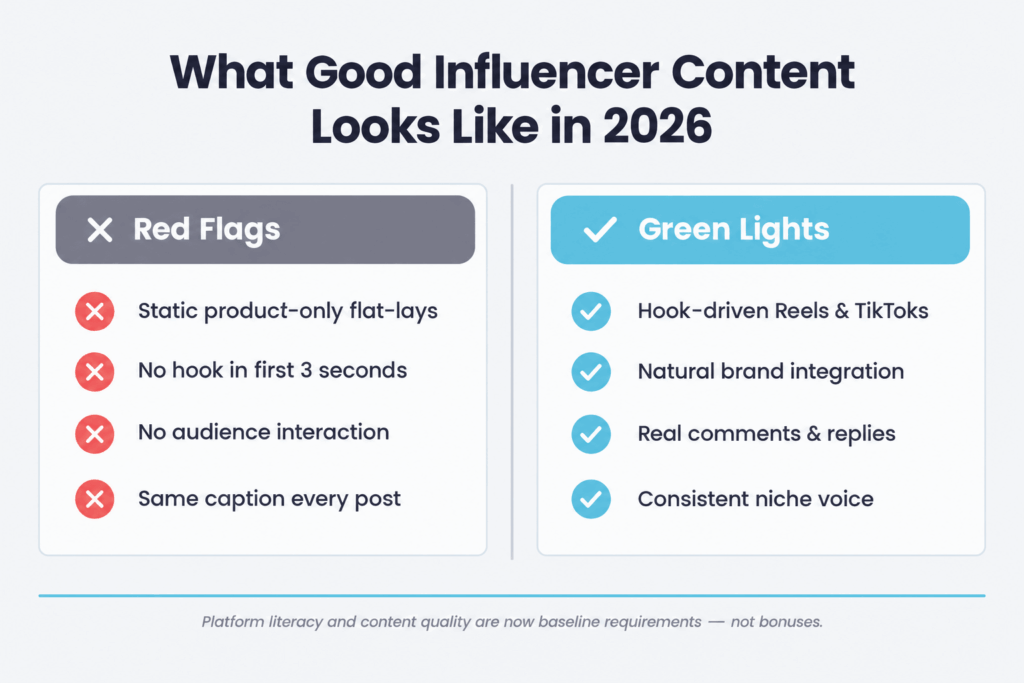
In 2026, content quality means more than good lighting and a clean background. It means knowing how to create for the platforms where attention actually lives: short-form vertical video on Instagram Reels and TikTok, long-form storytelling on YouTube, and quick-hit reviews on Stories. A creator who only knows how to take a flat-lay product photo is working with a skill set from five years ago.
Good influencers understand native formats: hook-driven Reels that hold attention in the first three seconds, TikTok editing styles that feel organic rather than produced, and how to integrate a brand message without breaking the flow of their content. They also know how each platform’s algorithm distributes content – and create accordingly. Platform literacy is now a core skill, not a bonus.
6. A Commercial Mindset – Can They Actually Drive Action?
Brand awareness is nice. Sales are better. The best influencers understand that their value to a brand isn’t measured purely in views, it’s measured in the actions their audience takes. A creator with a commercial mindset knows how to build genuine desire in a product, direct their audience to act (visit the link in bio, use the discount code, swipe up), and structure content with a soft but clear call to action.
This quality shows up clearly in affiliate influencer campaigns, where creators use unique discount codes and referral links and are rewarded when their audience converts. Creators who thrive in this model understand the connection between their content and revenue, and they take it seriously. Creators who are only interested in reach metrics often struggle with conversion-focused campaigns.
7. ACCC Disclosure Compliance
What the ACCC requires:
Under Australian Consumer Law, influencers must clearly disclose when they have received a product, payment, or any commercial benefit in exchange for content. This applies to gifted products, not just paid sponsorships. Acceptable disclosures include #gifted, #ad, #sponsored, or plain language like “Brand sent me this to try.” Disclosures must be prominent, buried in a caption or hidden among hashtags does not comply.
A good influencer handles disclosure correctly without being prompted, and without trying to hide it. Paradoxically, proper disclosure often increases audience trust rather than undermining it. Audiences respect creators who are upfront, and brands that work with non-disclosing creators carry reputational and legal risk. Check a creator’s past sponsored content before partnering with them. If you can’t easily find their disclosures, that tells you something.
Never ask a creator to hide that a product was gifted or to remove a genuine negative opinion. Authentic content, even with minor criticisms, builds more long-term trust than polished promotional content, and it keeps both the creator and your brand on the right side of the law.
8. Data Transparency and Willingness to Share Results
High-quality creators have nothing to hide. When you ask for audience insights, reach data, or post-campaign screenshots, they send them promptly and without negotiation. This transparency is a strong signal of professionalism, and of a creator who is confident in their actual performance rather than relying on inflated numbers to secure deals.
For brands running gifted campaigns, the ability to track results per creator is essential. Tools like Referwo provide per-creator tracking through unique discount codes and referral links, so you can see exactly which creators are driving clicks, traffic, and conversions, rather than guessing based on impressions alone. When creators know their results are being tracked, the ones who are confident in their performance will embrace it. The ones who resist it often have a reason to.
9. Consistency and Posting Reliability
A creator who posts sporadically, three times in January, nothing until April, then a burst of activity, has an audience that isn’t in the habit of paying attention to them. Consistent posting keeps an audience primed and engaged, and it signals that the creator treats their platform as a genuine business rather than a side hobby.
Consistency also applies to campaign delivery. When you agree on a gifted post, does the creator deliver within the timeframe discussed? Do they post what they said they’d post, or does the content take three follow-up messages and still never appear? Post rate, the percentage of creators who actually post after receiving a gifted product, is one of the most important metrics in influencer marketing. The industry average hovers around 40–50%. Platforms like Referwo report an 80%+ post rate among vetted creators, precisely because creator reliability is part of the vetting process.
10. Professionalism and Communication
The day-to-day experience of working with a creator matters more than most brands realise. A creator who responds to messages within a reasonable timeframe, asks sensible questions about the brief, flags any issues early, and follows through without needing to be chased is a creator you’ll want to work with again. One who ghosts you for three weeks after receiving a free product, then posts something that has nothing to do with the brief, costs you money and time.
Professionalism also shows up in how a creator handles feedback. Good creators can take direction without becoming defensive, and they understand that a brand partnership is a two-way relationship, not a transaction where they hold all the power. Check reviews or feedback from other brands who have worked with a creator before committing to a partnership, particularly for paid or long-term arrangements. See how different campaign types affect what level of professionalism you need to manage the relationship.
Red Flags to Watch For
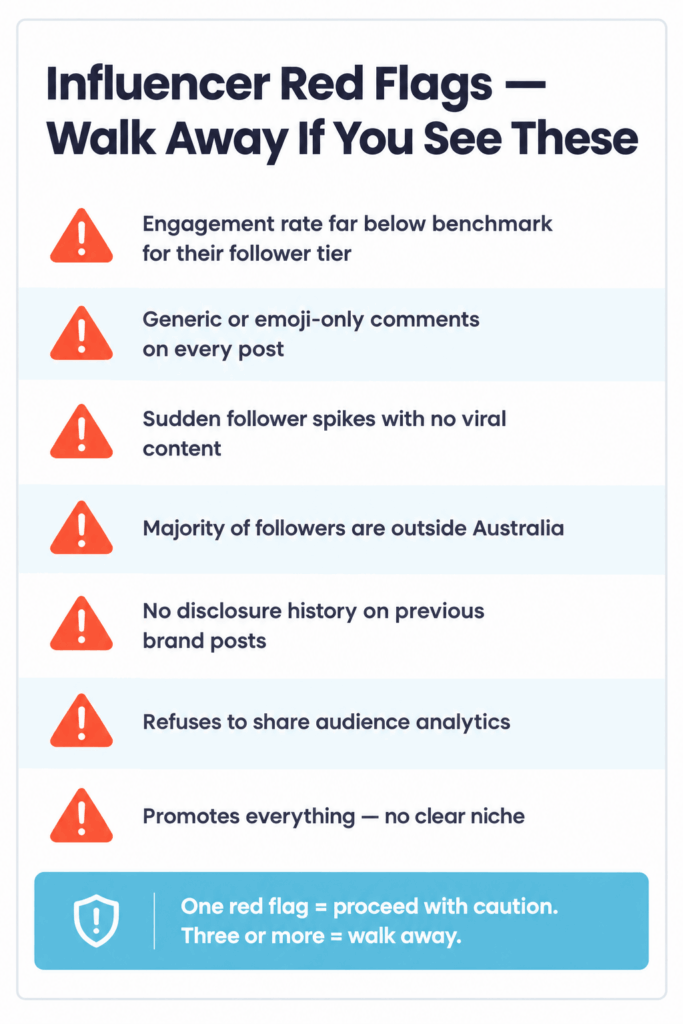
Knowing what a good influencer looks like is only half the equation. These warning signs indicate a creator who is unlikely to deliver:
- Engagement rate far below benchmark for their tier – especially if follower count is high. High followers, almost no engagement is the clearest sign of purchased followers.
- Generic or repetitive comments – if comment sections are full of “Great post!” and emoji-only responses, the engagement is likely artificial or from a pod, not genuine community.
- Sudden follower spikes – check their follower growth history. A creator who jumped from 5,000 to 80,000 followers in two weeks without a viral post has almost certainly bought them.
- Majority of followers are overseas – for an Australian brand, a creator whose audience is 70% US or European doesn’t serve your campaign, regardless of how impressive their total count looks.
- No disclosure history on previous brand posts – a creator who has promoted products without #gifted or #ad tags is a liability. Non-disclosure under Australian Consumer Law is the brand’s problem too.
- Resistance to sharing audience analytics – a confident, legitimate creator will share their data without hesitation. Reluctance suggests they know the numbers won’t hold up.
- Promotes everything that comes their way – a creator with no clear niche who promotes baby products, cryptocurrency, fast food, and fitness gear in the same week has no credible authority in any of them.
How Referwo Helps You Find Creators Who Tick Every Box
Manually vetting influencers against all ten qualities above takes significant time – and it still relies on creators being honest about their metrics. Referwo solves this by giving Australian ecommerce brands access to a pre-vetted network of over 2,500 creators with verified Australian audiences, so the baseline quality filters are already applied before you reach out to a single person.
Every creator on the platform has been reviewed for audience authenticity, engagement quality, niche fit, and posting consistency. Once you launch a campaign, Referwo tracks results per creator through unique discount codes and referral links – so you can see exactly which creators are driving sales, not just impressions. No guesswork, no spreadsheets, no chasing creators for screenshots.
Brands using Referwo report an 80%+ post rate and real, attributable revenue. That result didn’t come from finding influencers with the biggest followings – it came from finding the right ones.
To see how Referwo compares to running campaigns manually or through other platforms, read our guide on choosing the best influencer marketing platform for Australian brands, or explore the Referwo platform to see how it works.
Frequently Asked Questions
What is a good engagement rate for an influencer in 2026?
For Instagram, a healthy engagement rate is 3-6% for micro-influencers (10K-100K followers) and 5–8% for nano-influencers (under 10K). On TikTok, rates tend to run higher, 6-10% for micro-influencers is typical. Any creator sitting significantly below these benchmarks for their tier warrants scrutiny. A high follower count with under 1% engagement is almost always a sign of inauthentic growth.
Do influencers need to disclose gifted products in Australia?
Yes. Under the Australian Consumer Law (ACL), influencers are required to disclose any commercial arrangement, including receiving free products, that could influence the content they create. The ACCC expects disclosures to be clear and prominent, not buried in hashtags. Acceptable disclosures include #gifted, #ad, #sponsored, or plain-language statements in the caption or video itself. Both the brand and the creator share responsibility for compliance.
How many followers does someone need to be an effective influencer?
There is no minimum follower count for an influencer to be effective. Nano-influencers (1,000–10,000 followers) consistently generate some of the highest engagement rates and most authentic recommendations in the industry. For ecommerce brands, a creator with 5,000 highly engaged followers in your exact product niche will often outperform a creator with 200,000 general lifestyle followers. Relevance and engagement beat raw reach every time.
What is a good post rate for a gifted influencer campaign?
The industry average post rate for gifted campaigns (the percentage of creators who post after receiving a product) is around 40–50%. A post rate above 70% is considered strong. Referwo reports an 80%+ post rate across its vetted creator network. Post rate is one of the most important metrics in gifted campaigns, a low rate means wasted product cost and no content to show for it.
How can I tell if an influencer has bought followers?
Look for a mismatch between follower count and engagement: a creator with 100,000 followers getting 50 likes per post is almost certainly using purchased followers. Other signals include sudden sharp spikes in follower count with no corresponding viral content, generic or emoji-only comments, and a comment section that looks the same on every post. You can also check follower-to-following ratios, accounts following 80,000 others but with no verified activity are a common component of fake follower pools.
Is it better to work with one large influencer or many smaller ones?
For most ecommerce brands, working with multiple micro and nano-influencers delivers better results than a single macro-influencer at the same budget. Multiple smaller creators produce more content, reach more differentiated audiences, generate more discount code usage, and create social proof through volume. One creator posting once creates a moment; fifteen creators posting across two weeks creates a wave.
What is the best campaign type for working with influencers in Australia?
For most Australian ecommerce brands, a hybrid gifted + affiliate model works best. You gift the product (eliminating upfront content fees) and offer the creator a commission on sales via a unique discount code or referral link. This aligns incentives, creators earn more when their audience converts, so they’re motivated to create genuinely persuasive content. Read our breakdown of affiliate vs gifted vs paid influencer campaigns to find the right model for your stage.
What makes a good influencer for a small Shopify brand with a limited budget?
Nano and micro-influencers (1K–50K followers) are the right starting point for most small Shopify brands. They’re accessible through gifting alone (no fees required), they have the tightest audience trust, and their content often generates better conversion rates than larger creators at a fraction of the cost. Look for creators who already talk about products in your category, have an Australian-based audience, and show genuine engagement, comments, saves, and DMs, rather than passive scrollers. Product-gifted campaign costs are essentially your product COGS plus shipping, making the ROI potential exceptionally high when you find the right fit.
About the author: Ewen Ling is the co-founder of Referwo, an influencer marketing platform built for Australian ecommerce brands. With 16 years of hands-on experience in ecommerce and digital marketing, Ewen works with Shopify brands across Australia to build creator programmes that generate attributable revenue – not just awareness. He is also the founder of Elinix AI, a Melbourne-based ecommerce digital marketing agency.