



Last updated: July 2026
Influencer marketing builds customer trust for ecommerce brands because it puts real people, not a product page, in front of a shopper’s decision. Creators post genuine reviews, unboxings and demonstrations that show a product actually works, and that content shows up everywhere a customer researches, including inside AI-powered search tools like Google AI Overviews and ChatGPT. As those tools compress research into a single summary, brands with real reviews, creator content and UGC give AI tools something to recommend. Brands with none of that have nothing to point to. This guide covers why trust now matters more than visibility, and the five practical ways Australian ecommerce brands build it through influencer marketing.
Quick Answer
Influencer marketing builds customer trust for ecommerce brands through authentic reviews, creator content and UGC, content a product page can’t produce on its own. That trust matters even more now that AI-powered search tools summarise shopping research before a customer visits a website, since brands with real trust signals are the ones AI tools have something to recommend.
Why Is Trust More Valuable Than Visibility Now?
Visibility gets a brand noticed. Trust gets a customer to buy. That gap matters more now that AI-powered tools summarise research before a shopper opens a single website. Google’s AI Overviews and conversational tools like ChatGPT compress what used to be several tabs of research into one direct answer, so a brand needs real signals for that answer to draw on, not just a high ranking.
Picture two Australian skincare brands. Both rank on page one. Both have decent websites and similar pricing. The difference shows up the moment a customer researches further.
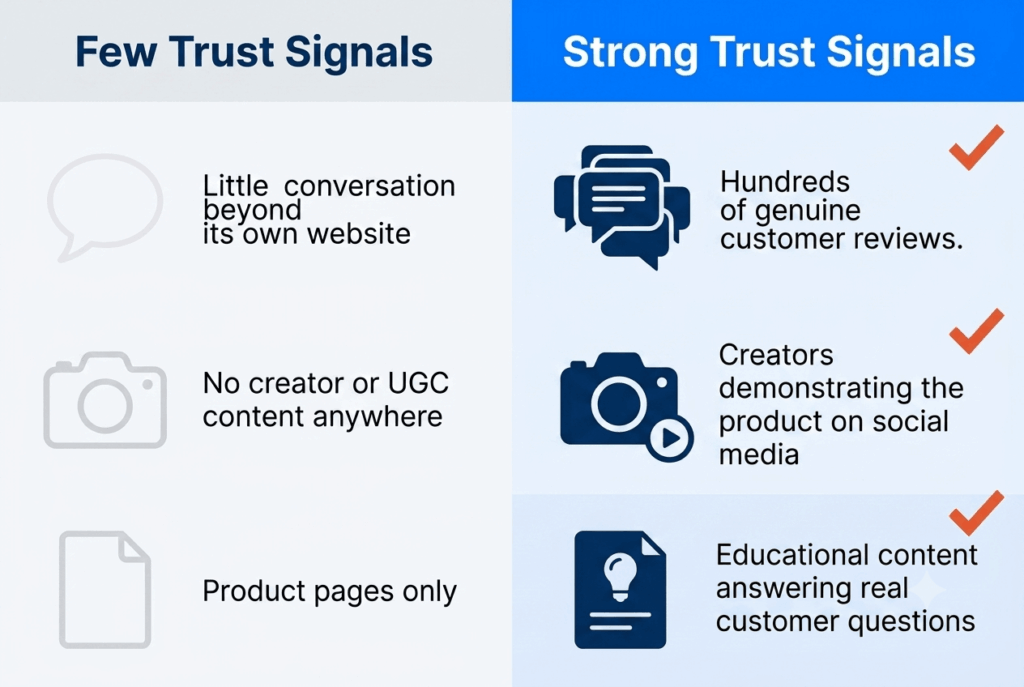
| Brand with few trust signals | Brand with strong trust signals |
| Little conversation beyond its own website | Hundreds of genuine customer reviews |
| No creator or UGC content anywhere | Creators demonstrating the product on social media |
| Product pages only | Educational content answering real customer questions |
Most shoppers trust a recommendation from a real person over a marketing message from a brand. That’s the whole reason performance influencer marketing, campaigns structured around measurable outcomes rather than reach alone, has become such a valuable part of ecommerce growth.
Definition
Performance influencer marketing is a campaign model where creators are paid based on measurable results, like clicks, conversions or sales, rather than a flat fee for reach or impressions alone.
How Does Influencer Marketing Build Trust Better Than Ads Do?
Influencer marketing has moved well beyond a single sponsored post. Creators now answer the questions a shopper actually has before buying: does this work, has anyone else used it, is it worth the money. An unboxing video, a tutorial or a genuine review gives context a product page cannot.
For ecommerce brands, that creates several lasting benefits: authentic product education that shows real use cases instead of a features list, social proof that reduces uncertainty during the buying decision, a reusable library of UGC that can be repurposed across product pages, email and paid ads, and visibility across the platforms where customers actually research products, not just your own site.
The goal is not to work with the biggest names. For many Australian ecommerce brands, micro and nano creators consistently outperform celebrity influencers because their audiences are smaller but far more engaged, and trust their recommendations more. Our micro-influencer engagement analysis breaks down exactly why.
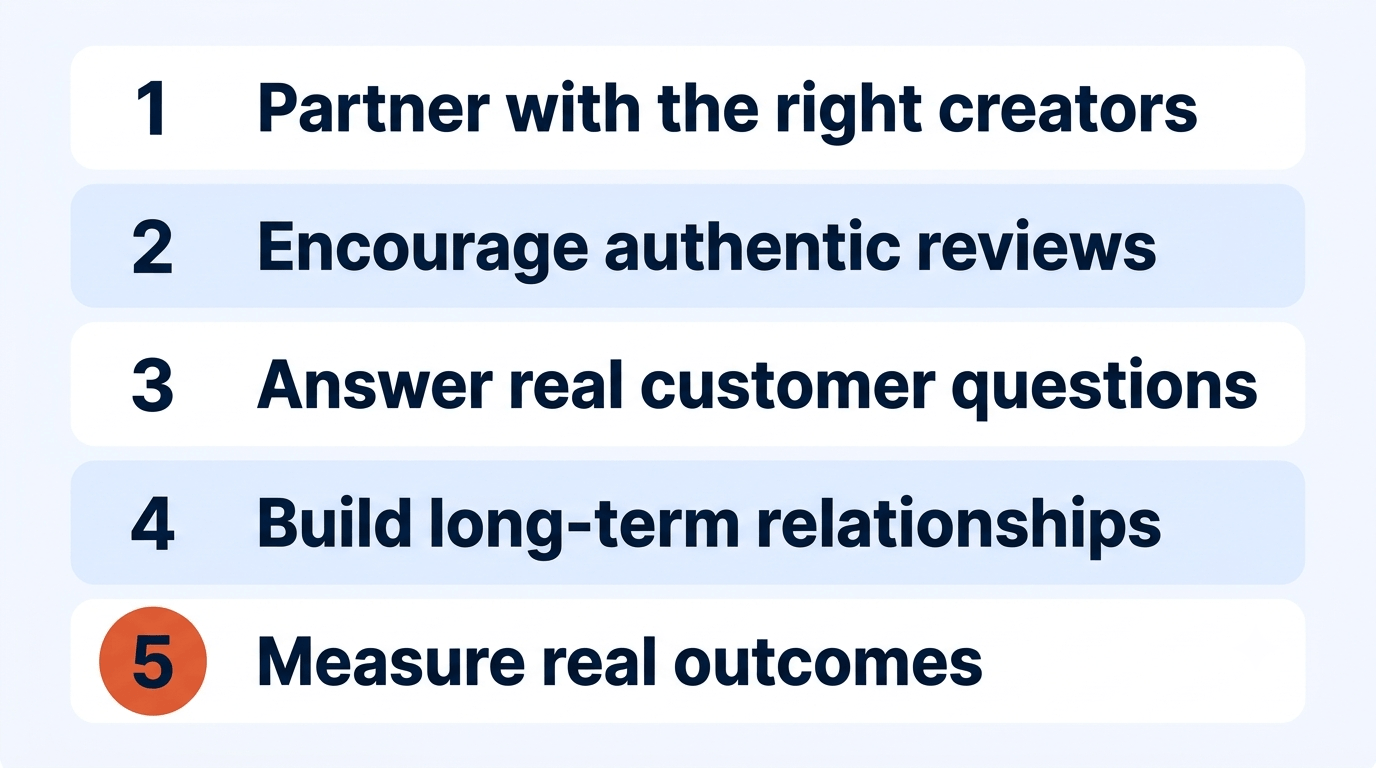
Five Ways Australian Ecommerce Brands Build Customer Trust
1. Partner with creators who genuinely fit the brand. Relevance and engagement quality matter more than follower count.
2. Encourage authentic customer reviews. A mix of genuine reviews reads as more trustworthy than a flawless, low-volume profile.
3. Publish content that answers real customer questions. Buying guides, comparisons and care guides build authority before the sale.
4. Build long-term creator relationships instead of one-off campaigns. Repeated product use over time reads as more credible than a single sponsored post.
5. Measure business outcomes, not vanity metrics. Track traffic, conversions, affiliate revenue, ROI and customer acquisition cost, not just reach or likes.
How Does AI Search Change the Trust Equation?
None of this changes because of AI search. It just raises the stakes. Online retail already made up 12.7% of total Australian retail turnover as of June 2025, up from 11.6% a year earlier, and more of that buying journey now starts with a summarised answer rather than a page of search results. Australia Post’s 2026 ecommerce research found roughly a third of Australian shoppers are already using AI tools for shopping advice, with most saying they’re comfortable doing so.
That doesn’t mean traditional search is disappearing. It means the brands already building trust the old-fashioned way, real reviews, real creators, real UGC, are the ones AI tools have something to recommend. The brands with nothing to point to get skipped, in a search results page or an AI summary alike.
How Referwo Helps Ecommerce Brands Build This at Scale
Running creator campaigns manually gets overwhelming fast. Finding creators, managing outreach, organising product gifting and tracking affiliate sales usually means several disconnected tools and a lot of admin.
I built Referwo after living that exact problem running my own ecommerce brand. On one platform, brands post a campaign and vetted creators apply the same day. Approved influencers self-checkout for gifted product with a single-use code, so orders flow through Shopify or WooCommerce like normal sales, no manual order-taking. Every creator gets a unique discount code and trackable link, so revenue shows up against their name in real time.
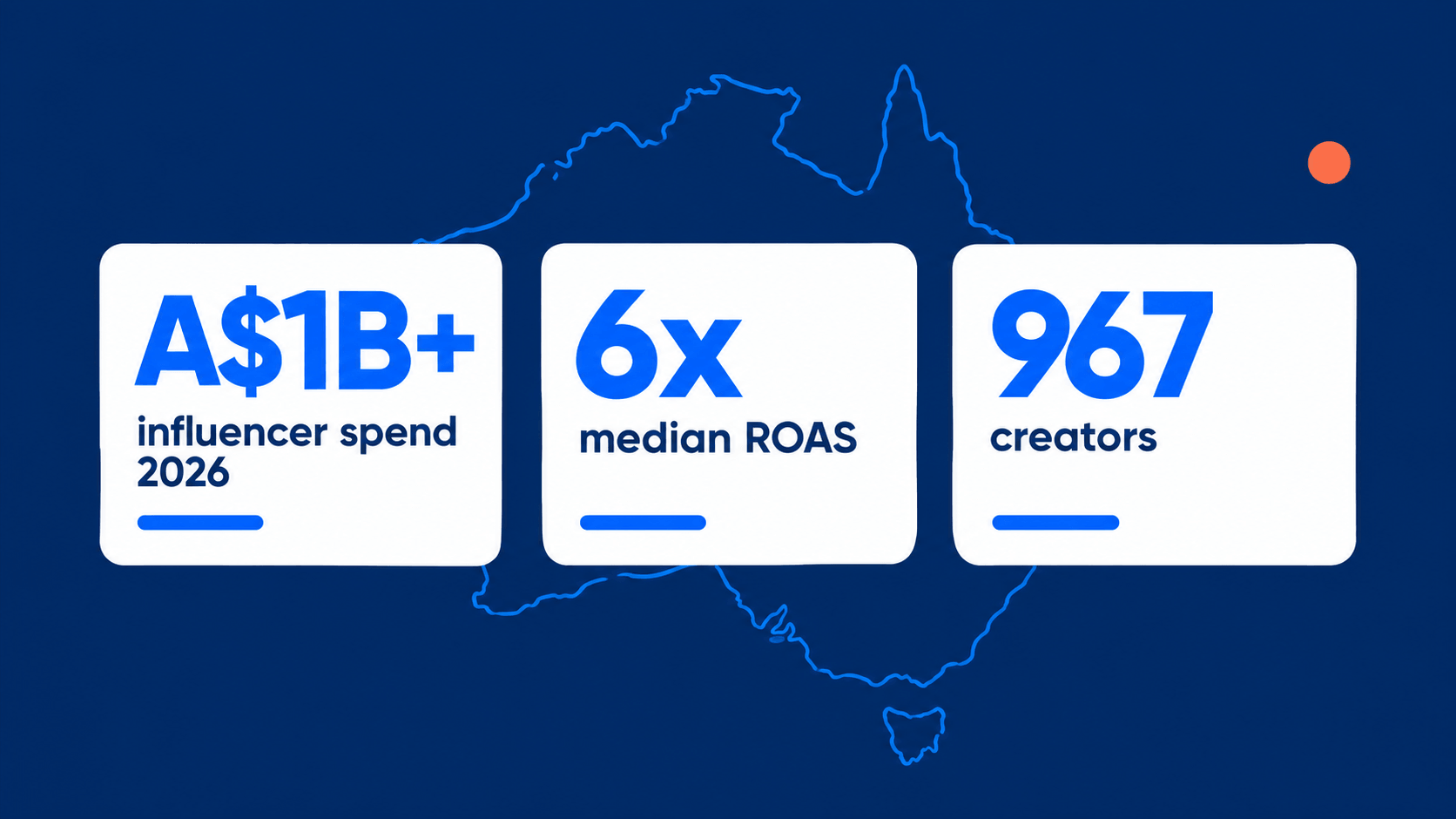
Sole Sox, a small parenting-niche brand, ran it themselves with 127 influencers and turned that into 6.5x ROAS. Neither brand added headcount to get there.
Referwo does not replace your marketing strategy. It removes the manual work so your team spends more time on the creator relationships that actually build trust. Plans start at USD 69 a month, with no lock-in contract and a 14-day free trial to test it yourself. If you’re comparing options first, our guide to the best influencer marketing platforms in Australia covers how Referwo stacks up.
Frequently Asked Questions
How does influencer marketing help ecommerce brands build customer trust?
Influencer marketing generates authentic reviews, UGC and product demonstrations that show real people already use and rate a product. Those assets build trust with potential customers across search engines, social media and AI-powered search alike.
What type of influencers deliver the best results for ecommerce brands?
For many Australian ecommerce brands, micro and nano influencers deliver higher engagement and stronger audience trust than celebrity influencers. Audience fit matters more than follower count.
How do I know if my influencer campaign is working?
Measure business outcomes rather than vanity metrics. Track website traffic, conversions, affiliate sales, customer acquisition cost, ROI and the UGC produced through each campaign.
Is AI search replacing Google Search for shopping research?
No. AI-powered tools are changing how customers research products, but traditional search remains an important discovery channel. Many shoppers use both during the same buying journey.
How can ecommerce brands build more customer trust online?
Publish helpful educational content, encourage authentic customer reviews, partner with relevant creators, and showcase real customer experiences consistently across every channel.
The underlying rule hasn’t changed: people buy from businesses they trust, whether they get there through a search result or an AI summary. Authentic creator partnerships, real reviews and genuine UGC are what give both AI tools and human shoppers a reason to recommend your brand. If you’re ready to build that kind of trust without the manual workload, start your 14-day free trial or book a 15-minute demo to see how Referwo helps Australian ecommerce brands scale influencer marketing.