
By Ewen Ling, Co-Founder, Referwo | Ecommerce Growth Strategist
Last updated: November 2026
Quick answer: An influencer marketing platform helps skincare and beauty brands in Australia run creator campaigns in one place. You gift product to creators who apply, track each creator’s sales with a unique discount code, and keep their content together. On Referwo, plans start at US$69 a month with a 14-day free trial, and brands pay no commission to Referwo on sales.
Beauty buyers want to see a product on real skin before they pay for it. They want to know how a serum feels, whether a tinted moisturiser matches their skin tone, and what a cleanser does after two weeks, not two minutes. A product photo can’t answer those questions. A creator using the product on camera can.
This guide is for skincare, hair care and cosmetics brand owners in Australia who want that content without hiring an agency. It covers what a platform should do for a beauty brand, which creators to pick, what to ask them to film, the Australian rules that apply to beauty posts, and what it costs. You can see how campaigns run on our platform for brands, and how Zuluz Skincare worked with 209 creators on one awareness campaign.
Key facts
- Zuluz Skincare approved 209 creators on Referwo, who made 304 pieces of content with 305,000+ views and 3,500+ comments (Referwo case study).
- 45.9% of survey respondents use promo or discount codes to measure influencer results, ahead of affiliate links at 26.0% (Influencer Marketing Hub, 2026).
- 81% of 118 influencers reviewed by the ACCC made posts that raised concerns, most often for not disclosing a brand relationship (ACCC, December 2023).
- Paid or gifted creators can’t give personal testimonials in ads for therapeutic sunscreens and other therapeutic goods, and the TGA’s preferred option in its 2026 review is to keep that rule (TGA, July 2026).
Why do skincare and beauty brands use influencer marketing?
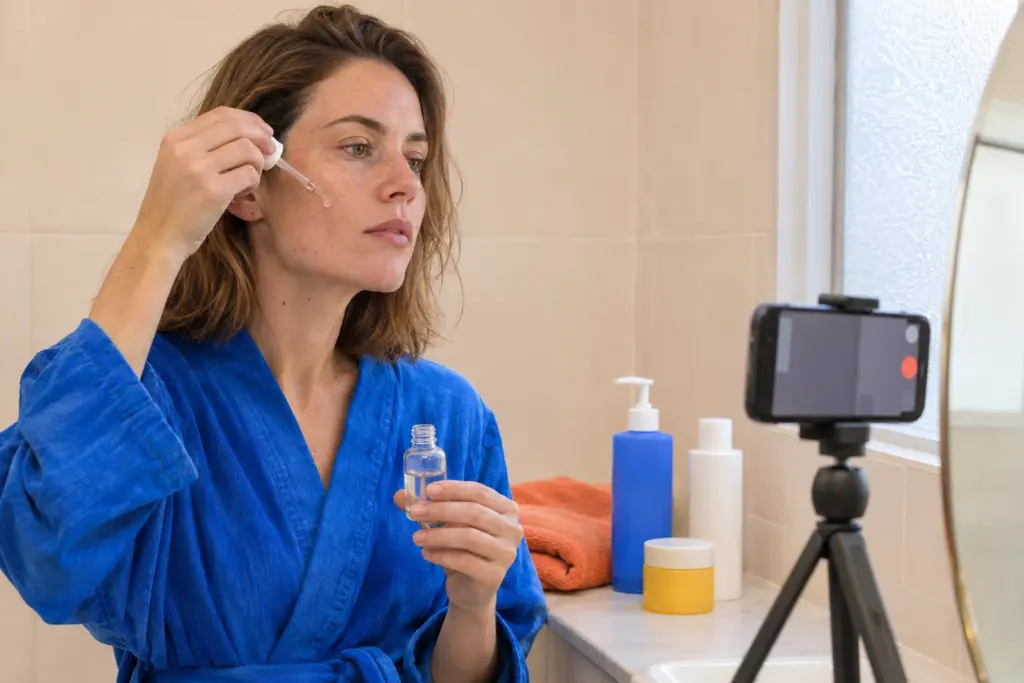
Skincare and beauty brands use influencer marketing because shoppers want to see a product used on real skin before they buy. A creator can show texture, shade and finish on camera, describe the scent, then come back after a few weeks to show how a product has worked into their routine. Creator content helps answer questions that product photos alone can’t, and a unique discount code tracks the orders attributed to each creator.
Beauty is also a category where people buy more than once. A cleanser runs out. A shade gets discontinued. A new season brings a new SPF moisturiser or a richer night cream. Each restock gives a creator an honest reason to post about you again, to the same followers.
That repeat pattern is why beauty brands love using Referwo to build a community of creators around their brand. Every campaign adds creators to your community. The ones who love your product come back, post again and bring their followers with them, and every sale through their code stays tracked.
What makes beauty different from other categories?
A few things set beauty apart from most product categories:
- Results take time. A serum or hair treatment is judged over weeks, so one post on delivery day rarely tells the full story.
- Skin and hair vary. A creator with oily skin and a creator with dry skin can have very different results from the same moisturiser.
- Claims are regulated. Some products count as therapeutic goods, which changes what a paid or gifted creator is allowed to say (see the rules section below).
What should a beauty brand look for in an influencer marketing platform?
A beauty brand should look for a platform that handles gifted product, tracks sales by creator, collects usage rights for ads, and lets you choose every creator yourself. Skin type, shade range and claims rules matter in beauty, so approval should stay with you. Check the monthly price, the creator approval limit and whether the platform takes a cut of your sales.
Use this checklist when you compare platforms:
| What to check | Why it matters for beauty brands | How Referwo handles it |
|---|---|---|
| Who chooses the creators | You need to match skin type, hair type and shade | Creators apply to your campaign and you approve each one |
| Gifted product | For campaigns that offer gifted product, you need an easy way to send it | Approved creators order with a single-use code at your checkout, and you pack and send |
| Sales tracking | Shows which creators sell, not just who gets views | A unique discount code for every creator, tracked in Shopify or WooCommerce |
| Usage rights | You may want to run creator videos as ads | You request content usage rights when you set up the campaign: say where you’ll use the content, whether as paid ads, for how long, and if you can edit it |
| Commission on your sales | A cut of sales eats into your margin | Brands pay no commission to Referwo on sales |
| Accountability | Creators who miss deadlines cost you product | Brands see reviews from other brands, and creators can be flagged |
| Contract | You want to test before you commit | Monthly plans, no lock-in contract |
If you want to compare named platforms side by side, our guide to the best influencer marketing platform in Australia covers the local options.
Which beauty creators should you work with?
Work with creators whose skin type, hair type or shade matches your product, and whose followers are the people you sell to. Check the audience country too, so most followers live where you ship. For most Australian beauty brands, creators with 2,000 to 50,000 followers are a practical starting point. Before you approve them, read their comments and look for honest routines and real replies. Then agree whether product, commission or a fee suits the work.
Match the creator to the product, not just the word “beauty”:
- Acne and oil control skincare: creators who talk openly about breakouts and show their bare skin.
- Hydration and anti-ageing skincare: creators who post skin routines and talk about dry or mature skin.
- Make-up and base products: creators who share their shade, so followers with a similar tone can judge the match.
- Hair care: creators whose hair type matches your product, such as curly, fine, coloured or thick hair.
- Clean and natural beauty: creators who already read ingredient labels and explain them to followers.
- Body care and fragrance: lifestyle creators who post daily routines, gym bags or travel kits.
On Referwo, creators apply to your campaign, and you can also browse the Explore page and invite creators you like, or invite creators you found yourself to apply. Wuli Hair Care, a niche hair care brand, said Referwo was “a great tool to help me find the right collaborators.”
Before you approve anyone, look at their last 10 posts. You want real comments from followers asking about products, natural lighting, and a mix of brands rather than a feed of back-to-back ads. Our guide on how to vet influencers before you work with them covers fake followers and red flags in detail.
What content should you ask beauty creators to make?
Ask beauty creators for short videos that show the product on their skin or hair, in natural light, with a follow-up after a few weeks of use. For therapeutic goods, such as primary sunscreens, gifted creators can’t give personal-use testimonials, so check the rules section below first. A first-impression clip shows texture and finish. A check-in after two to four weeks shows how the product fits a real routine. If you want to run the videos as ads, ask for vertical video and usage rights in the brief.
Keep the ask in proportion to what you send. One cleanser doesn’t cover three Reels, a photo set and ad rights. Pick the one or two pieces you need most, or add a fee or a higher commission for extra work.
| Content format | Works best for | What to put in the brief |
|---|---|---|
| Texture and swatch clip | Serums, creams, foundations | Close-up on the hand or face, natural light, no filter |
| First impression | New launches | Unboxing, first use and honest first thoughts |
| Two to four week check-in | Skincare and hair treatments | The same angle and light as the first video |
| Get ready with me | Make-up and hair styling | The product used inside a full routine |
| Shade match | Base make-up | The creator’s shade name and skin undertone |
| Stories with a link | Repeat sales | The discount code on screen and a restock reminder |
Be clear about format. If you need video for ads, write “vertical Reels only” in the brief rather than leaving it open, or you may get photos you can’t use.
Where should the content go after the campaign?
Creator videos can do more than one job. With the creator’s agreement on usage rights, the same clip can sit on your product page, go into a welcome email, or run as a paid social ad. Zuluz Skincare’s campaign produced 304 pieces of content. A library that size can be reused across your site, emails and ads, as long as the creators have agreed to those uses.
What are the rules for beauty influencer posts in Australia?
Two sets of rules apply to most beauty influencer posts. Under Australian Consumer Law, any post a creator makes in return for free product or payment must be clearly labelled as advertising, for example with #ad. And if the product is a therapeutic good, such as a primary sunscreen, the Therapeutic Goods Administration (TGA) advertising code stops paid or gifted creators from giving personal testimonials.
Disclosure applies to gifted product
Gifted product counts as payment. In its December 2023 review, the ACCC found 81% of 118 influencers reviewed made posts that raised concerns, and not disclosing a brand relationship was the most common issue. Put the disclosure rule in your brief. Our guide to influencer gifting rules in Australia covers the labels that work and who is liable.
Is your product a cosmetic or a therapeutic good?
Most beauty products are cosmetics. Some are therapeutic goods, and the line often comes down to sunscreen and claims. According to the Australian Industrial Chemicals Introduction Scheme (AICIS), therapeutic sunscreens include primary sunscreens with an SPF of 4 or more. They also include some moisturisers with an SPF above 15. Many tinted foundations and lip products with SPF are classed as cosmetics, as long as they meet the conditions in the Therapeutic Goods (Excluded Goods) Determination 2018.
A product can also become a therapeutic good because of what it claims to do. If your marketing says a product treats or cures a skin condition, get advice before any creator repeats that claim.
What gifted creators can’t say about therapeutic goods
The TGA advertising code bans testimonials from anyone who has received, or will receive, “valuable consideration” for making them. The TGA’s July 2026 consultation paper says that includes influencers, and that free product samples and gifts count. So a creator who received your therapeutic sunscreen for free can’t say “this sunscreen worked for me” in your ad.
The same paper says the code does not expressly stop other paid endorsements. That may allow a creator to describe a product’s physical features without talking about their own use. Current and former health professionals can’t endorse therapeutic goods at all, which matters if you work with nurses or skin clinicians. Some stakeholders asked the TGA to allow paid sunscreen testimonials, but the TGA’s preferred option is to keep the ban. Check the TGA website for any change before you brief creators.
Brief tip for therapeutic products: If you sell a primary sunscreen or another therapeutic good, ask creators to stick to factual, approved product descriptions, such as texture and finish. They shouldn’t say or imply how the product worked for them, so no personal-use stories and no before and after results. Send that brief to your regulatory adviser before the campaign goes live.
This section is general information, not legal advice.
How does a beauty campaign work on Referwo?
A beauty campaign on Referwo runs in five steps: publish the campaign, approve the creators who apply, let them order gifted product with a single-use code, collect their content, and track sales through each creator’s discount code. The platform handles most of the admin, so a small team can manage dozens of creators without a spreadsheet.
- Publish the campaign. Describe the product, the creator you want (skin type, hair type, shade), the content you need, the posting deadline and the usage rights you’re asking for. Say in the brief what happens if content is late, such as a reminder and then a flag.
- Approve creators. Creators apply, and you check their profile, past content and reviews from other brands. You can also invite creators from the Explore page or creators you found yourself.
- Send product. Approved creators order the product at your checkout with a single-use code and enter their own address. You still pack and send the order.
- Collect content. Creators post and share their content in the platform, so you can see what’s live and follow up on anyone who misses a deadline.
- Track sales. Each creator gets a unique discount code. Sales through that code show up against the creator, and the creator earns the commission you set on each sale.
I Beauty AU wrote: “Really bringing out numerous influencers to promote for my brand!”
What did Zuluz Skincare get from its campaign?
Zuluz Skincare, a clean skincare brand, ran an awareness campaign on Referwo with 209 approved creators. Those creators made 304 pieces of content, with 305,000+ views, 35,000+ likes and 3,500+ comments. The goal was reach and conversation, so the case study reports no sales figure. If sales are your main goal, set a creator discount code and a commission from the start. You can read the full Zuluz Skincare case study or browse all Referwo case studies.

What does an influencer marketing platform cost for a beauty brand?
On Referwo, Basic costs US$69 a month and Standard costs US$99 a month, both with a 14-day free trial. Fully managed Premium costs US$399 a month. Brands pay no commission to Referwo on sales. Your other costs are the product you send, postage, the discount your customers get, the commission you choose to pay creators, and any fees you agree for extra content or usage rights.
| Plan | Price | Free trial | Best for |
|---|---|---|---|
| Basic | US$69 a month | 14 days | Testing one or two products, up to 15 creator approvals a month |
| Standard | US$99 a month | 14 days | Regular launches, up to 50 creator approvals a month |
| Premium | US$399 a month | No, starts with a demo | Brands that want the Referwo team to run campaigns |
Creators pay a 15% platform fee on what they earn through Referwo, and they’re paid by bank transfer through Stripe or by PayPal. Brands don’t pay that fee. A card is needed to start the free trial. The 14 days are enough to set up a campaign and see which creators apply. Shipping, a two to four week check-in and code sales usually take longer, so judge the results over a month or two.
A worked example
Here is a simple example with made-up numbers. Say your serum costs you A$20 to make, postage is A$10, and you approve 25 creators on Standard. The upfront gifting cost is 25 × A$30 = A$750, plus the US$99 plan (convert it to Australian dollars at your bank’s rate). If you set a 10% commission on code sales, you pay creators only when their code sells.
To compare this with ads or an agency, add the upfront cost, the discount your customers used, the commission you paid and any creator fees, then divide by the number of code sales. That gives you a campaign cost per code-attributed order. If you compare it with ads, count the same costs on both sides (product, discount and fees, not only media spend) over the same time period. Keep re-inviting the creators whose codes sell.
You can start with product-only campaigns, then add a fee for the creators whose content sells. Our guide to building a brand community with micro-influencers shows how to turn your best creators into regulars.

Frequently asked questions
What is the best influencer marketing platform for beauty brands in Australia?
The best platform for a beauty brand lets you approve every creator, send gifted product, track sales by creator and collect usage rights for ads. Referwo does this from US$69 a month with a 14-day free trial and no commission on your sales. Compare the monthly price, creator approval limits and whether you choose the creators yourself.
Can a skincare brand gift products to influencers in Australia?
Yes. Gifting is legal, but gifted product counts as payment, so the creator must label the post as advertising, for example with #ad. If the product is a therapeutic good, such as a primary sunscreen, a gifted creator can’t give a personal testimonial about it under the TGA advertising code. Put both rules in your brief.
Can influencers promote sunscreen in Australia?
Influencers can feature sunscreen, but paid or gifted creators can’t give personal testimonials about therapeutic sunscreens in ads. Many tinted foundations and lip products with SPF are cosmetics if they meet the exclusion conditions, and they follow the general disclosure rules. The TGA’s July 2026 consultation paper prefers to keep the testimonial ban for therapeutic sunscreens, so check for updates before you brief creators.
How many creators should a beauty brand start with?
Start with 15 to 30 creators for one product, if the product cost and postage fit your budget. That can give you a useful starting sample, depending on how many creators deliver and how varied they are. If your product is expensive to make, start smaller. On Referwo, Basic allows up to 15 creator approvals a month and Standard allows up to 50.
How do you track sales from beauty influencers?
Give every creator a unique discount code and connect your Shopify or WooCommerce store. Each sale through a code is credited to that creator, so you can see who sells and who mainly brings views. These are code-attributed sales, not a complete measure of a creator’s impact. Some buyers see a post and never use the code, and a shared code can be used by people who never saw the creator.
Start your first beauty campaign
Seeing a product on someone with similar skin or hair can help shoppers decide. A platform lets you run that kind of campaign every month and measure it. Choose creators by skin, hair and shade, brief them on the rules, track every code, and keep working with the ones who sell. If you want to test it with your own products, start your 14-day Referwo free trial and launch your first beauty campaign this week.
Sources
- Referwo, Zuluz Skincare case study: https://referwo.com/case-studies/discover-zuluz-skincare-clean-beauty-for-every-body
- Influencer Marketing Hub, Influencer Marketing Benchmark Report 2026: https://influencermarketinghub.com/influencer-marketing-benchmark-report/
- ACCC, media release, 7 December 2023: https://www.accc.gov.au/media-release/scrutiny-of-influencers-and-businesses-for-misleading-advertising-and-online-reviews-continues
- AICIS, Cosmetics with sunscreen: https://www.industrialchemicals.gov.au/cosmetics-and-soap/cosmetics-sunscreen
- TGA, Improvements to the Therapeutic Goods Advertising Code, consultation paper v1.0, July 2026: https://consultations.tga.gov.au/tga/improvements-to-the-advertising-code/supporting_documents/improvements-to-the-tg-advertising-codepdf