


Last updated: July 2026
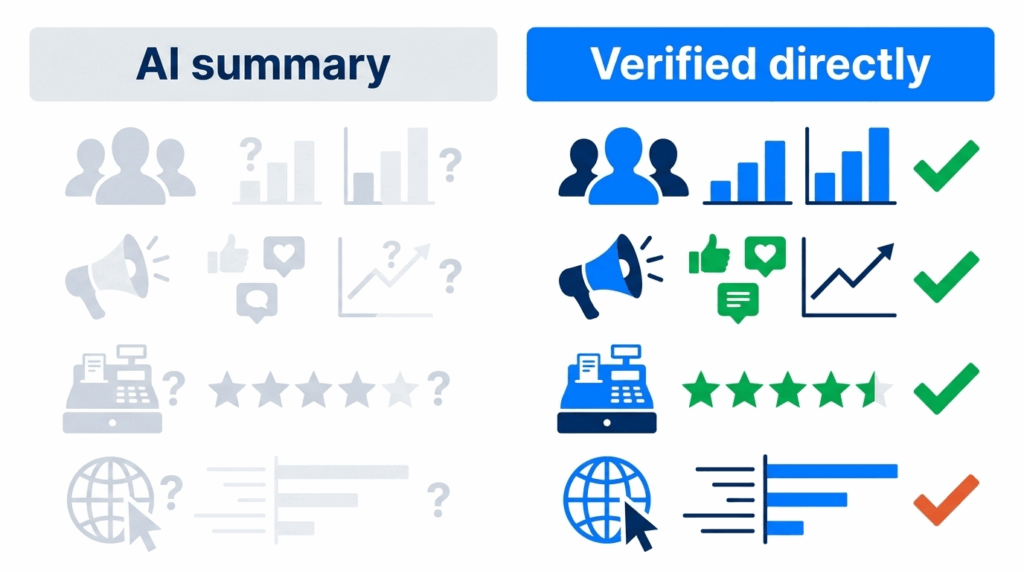
If you’re researching influencer marketing platforms or creators, treat an AI Overview or ChatGPT summary as a starting point, not the final word. What actually matters when you’re evaluating influencer marketing options is the same as it’s always been: verified pricing, real case studies, and platform features confirmed directly, not summarised secondhand by a tool that can be out of date. AI search tools are genuinely useful for a first pass, they just don’t replace the vetting work that decides whether a platform or creator is actually right for your brand. This guide covers where AI search helps, where it falls short, and what to check yourself before you commit to anything.
Quick Answer
When researching influencer marketing platforms or creators, treat an AI Overview or ChatGPT summary as a starting shortlist, not a final answer. AI answers can be out of date on pricing, features, and even which platforms still exist, so confirm pricing, features, and real case studies directly before deciding.
What Are AI Search Tools Actually Good For?
A brand researching influencer marketing platforms today might ask ChatGPT to compare a few options, or see a Google AI Overview summarise the field before clicking through to any single site. Used well, this is a genuinely useful shortcut: it can surface options you hadn’t considered, summarise a crowded category quickly, and give you a starting shortlist of platforms or creator types to look into further.
Where it gets risky is treating that summary as settled fact. Google’s AI Overviews build their answer by running several related searches behind the scenes and pulling from multiple sources, which means quality varies with what’s indexed. ChatGPT only cites real, current sources when browsing is switched on, otherwise it’s answering from what it already knows, which can be months out of date on pricing, features, or which platforms even still exist.
Definition
AI Overviews are AI-generated summaries that appear at the top of Google search results, compiled from multiple sources to answer a query directly, often without the searcher needing to click through to any individual website.
What Should You Verify Before You Trust the Summary?
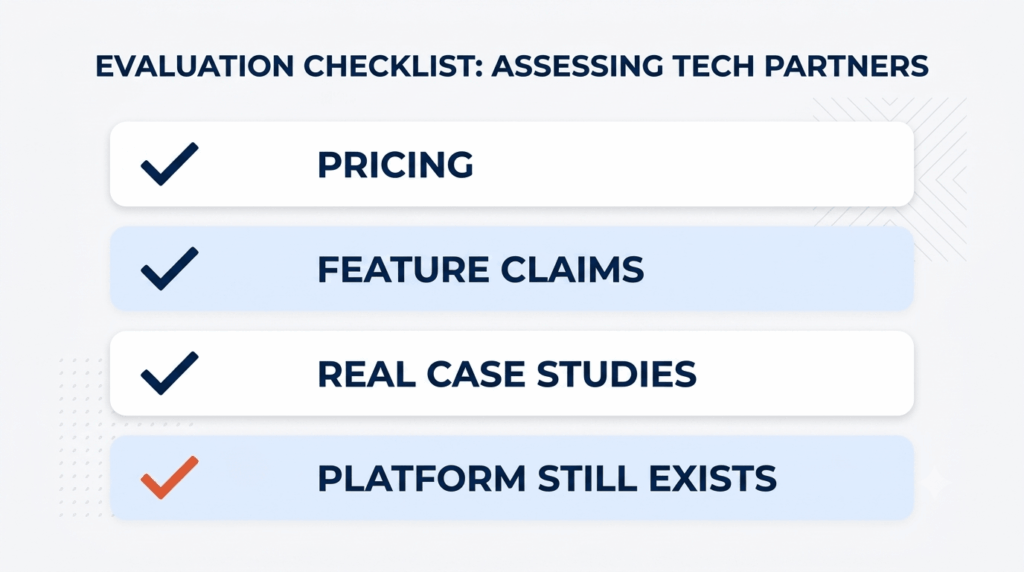
Pricing. AI answers on pricing age quickly. Confirm current plans directly on the platform’s own site before assuming a figure is still accurate.
Feature claims. If an AI summary says a platform “supports affiliate campaigns” or “integrates with Shopify,” verify that on the platform itself. Features change, and AI training data doesn’t update in real time.
Real case studies, not just claims. Look for named brands with actual tracked results, not just a platform’s own marketing language repeated back to you by an AI summary.
Whether the platform still exists in the form described. The influencer marketing platform space moves fast. Names get acquired, rebrand, or shut down. An AI summary trained months ago can describe a platform that’s already changed.
Does This Apply to Vetting Creators Too?
The same caution applies one level down, once you’ve picked a platform and are evaluating individual creators. However you find a creator, an AI-assisted search, a platform’s discovery tools, or a direct recommendation, the decision to actually work with them should rest on the same checks: does their audience match yours, is their engagement genuine, and do they have a track record of delivering on past brand partnerships. Our guide to finding micro-influencers covers that vetting process in depth.
A large follower count with unusually low engagement is a warning sign at every tier, and it’s exactly the kind of thing a surface-level AI summary won’t catch, since it typically isn’t looking at a specific creator’s actual numbers.
How Referwo Removes the Guesswork
Instead of piecing together an answer from search summaries, Referwo gives you a vetted pool of 2,500+ creators with the verification already done. Post a campaign once and creators apply to you the same day, each with audience insights already visible: engagement rate, age, gender and country breakdown, performance badges, and verified brand reviews from other brands they’ve worked with.
Cherub Baby used this approach to activate 119 influencers who produced 180+ pieces of content, driving over 250,000 impressions and $34,855 in tracked sales at 11.6x ROAS, without any of the manual research and outreach that usually eats up a small team’s week. Approved creators self-checkout gifted product with a single-use code, so there’s no manual order-taking, and every sale gets tracked back to the creator who drove it.
“119 verified influencers, 250,000+ impressions, 11.6x ROAS, with none of the manual research.” — Cherub Baby, via Referwo
Plans start at USD 69 a month, no lock-in contract, with a 14-day free trial to test the vetting and discovery tools yourself, rather than taking an AI summary’s word for it.
Frequently Asked Questions
Can I trust an AI Overview or ChatGPT to recommend the right influencer marketing platform?
Treat it as a useful starting shortlist, not a final answer. AI answers can be out of date on pricing, features, and even which platforms still exist, so verify anything important directly before deciding.
What should I verify myself before trusting an AI search summary about influencer marketing?
Check current pricing and feature claims directly on the platform’s own site, look for real named case studies rather than repeated marketing language, and confirm the platform still operates as described.
Does the same caution apply to vetting individual influencers?
Yes. Whoever or whatever helps you find a creator, an AI search, a hashtag search, or a platform’s tools, checking their real engagement rate and audience fit before approving them still matters most.
Why can AI search tools give outdated information about influencer marketing platforms?
ChatGPT answers from training data unless browsing is switched on, which can be months old. Google AI Overviews pull from indexed sources, so quality varies with what’s been recently published and crawled.
Is there a faster way to skip unreliable research entirely?
Yes. A vetted marketplace does the verification work upfront, showing real engagement data and reviews rather than requiring you to piece it together from search summaries.
AI search tools are a fine starting point for influencer marketing research, they just aren’t a substitute for confirming the details yourself. If you’d rather skip the guesswork entirely, start your 14-day free trial and see the verified creator data for yourself.