



By Ewen Ling, Co-Founder, Referwo | Ecommerce Growth Strategist
Last updated: September 2026
Brands that partner with influencers consistently outperform those relying on traditional advertising alone, and the gap is widening. In a landscape where consumers actively skip ads, block banners, and distrust polished corporate messaging, the authentic voice of a trusted creator carries a weight no paid placement can replicate. Influencer marketing isn’t new, but what it can do for a brand in 2026 is more trackable, more targeted, and more ROI-positive than it’s ever been.
Whether you’re a Shopify brand looking to drive your first hundred sales through creators or an established ecommerce business building a gifted or affiliate programme at scale, this guide covers exactly why influencer marketing should be part of your growth strategy, and what the modern version of it actually looks like.
Quick Answer
Brands should work with influencers because influencers have already earned the trust of the exact audience you’re trying to reach. Their content outperforms brand-produced creative, their recommendations drive real purchasing decisions, and modern tracking tools make ROI attributable at a per-creator level. For Australian ecommerce brands, micro and nano-influencers offer high returns at low cost, especially through gifted and affiliate campaign models.
1. Influencers Have Already Built the Trust Brands Struggle to Earn
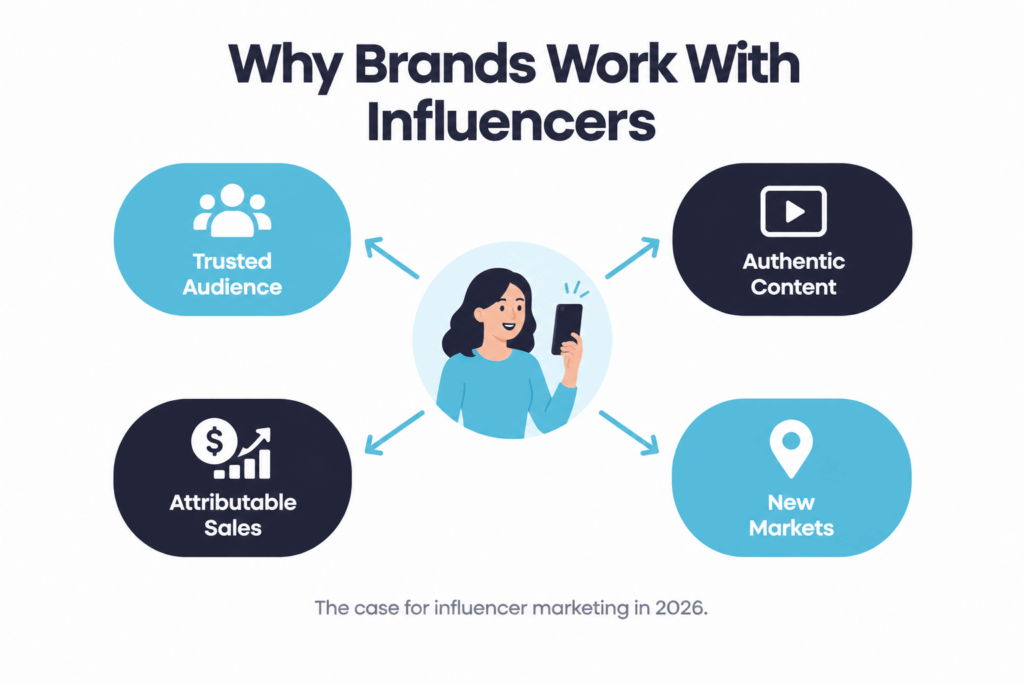
The single biggest advantage influencer marketing offers isn’t reach, it’s trust. An influencer who has spent years building an audience around sustainable living, baby nutrition, home design, or fitness has earned something that takes brands years of consistent investment to develop: genuine credibility with a specific group of people who genuinely care about what they say.
Research from the Pew Research Center consistently shows that consumers – particularly younger demographics – trust peer recommendations and social media voices far more than traditional advertising. A recommendation from a creator whose content someone watches daily functions less like an ad and more like advice from a knowledgeable friend. That trust transfer is the foundation of every successful influencer campaign, and it cannot be replicated by a banner ad or a media buy, regardless of budget.
Brand-produced advertising carries an inherent trust deficit. Consumers know the brand is promoting its own product. Influencers earn trust over time through honesty, including when they share genuine criticisms, which makes their positive recommendations far more persuasive. When they tell their audience they love something, their audience believes them.
2. They Know Your Target Audience – and Have the Data to Prove It
Influencers don’t just reach your target audience, they often understand them better than you do. A micro-influencer in the natural skincare space knows exactly what her audience worries about: ingredients lists, sustainability claims, price-to-quality ratios, and whether a product is suitable for sensitive skin. She’s been creating content for this community for years and receiving direct, unfiltered feedback through comments and messages.
This audience intimacy means influencer campaigns often outperform algorithmically targeted ad campaigns, not because the creator has a bigger reach, but because the message lands inside a context the audience already trusts. When you find the right micro-influencers for your brand, you’re tapping into a pre-built community that already fits your ideal customer profile, without needing to build it from scratch through paid acquisition.
Modern platforms also give brands access to verified audience analytics – age, gender split, geographic location, and primary interests, before committing to any partnership. For Australian brands in particular, confirming that a creator’s audience is predominantly Australia-based is essential. A creator with 100,000 overseas followers delivers very little value to a domestic ecommerce brand.
3. Influencer Content Outperforms Brand-Produced Creative
Influencer-generated content consistently outperforms brand-produced creative across key performance metrics: engagement rate, video watch time, saves, and click-through rate. The reason is straightforward, it doesn’t look like advertising. Native content blends into the platform experience rather than interrupting it, and audiences are far less likely to scroll past something from a creator they follow than a branded post from an account they haven’t chosen to engage with.
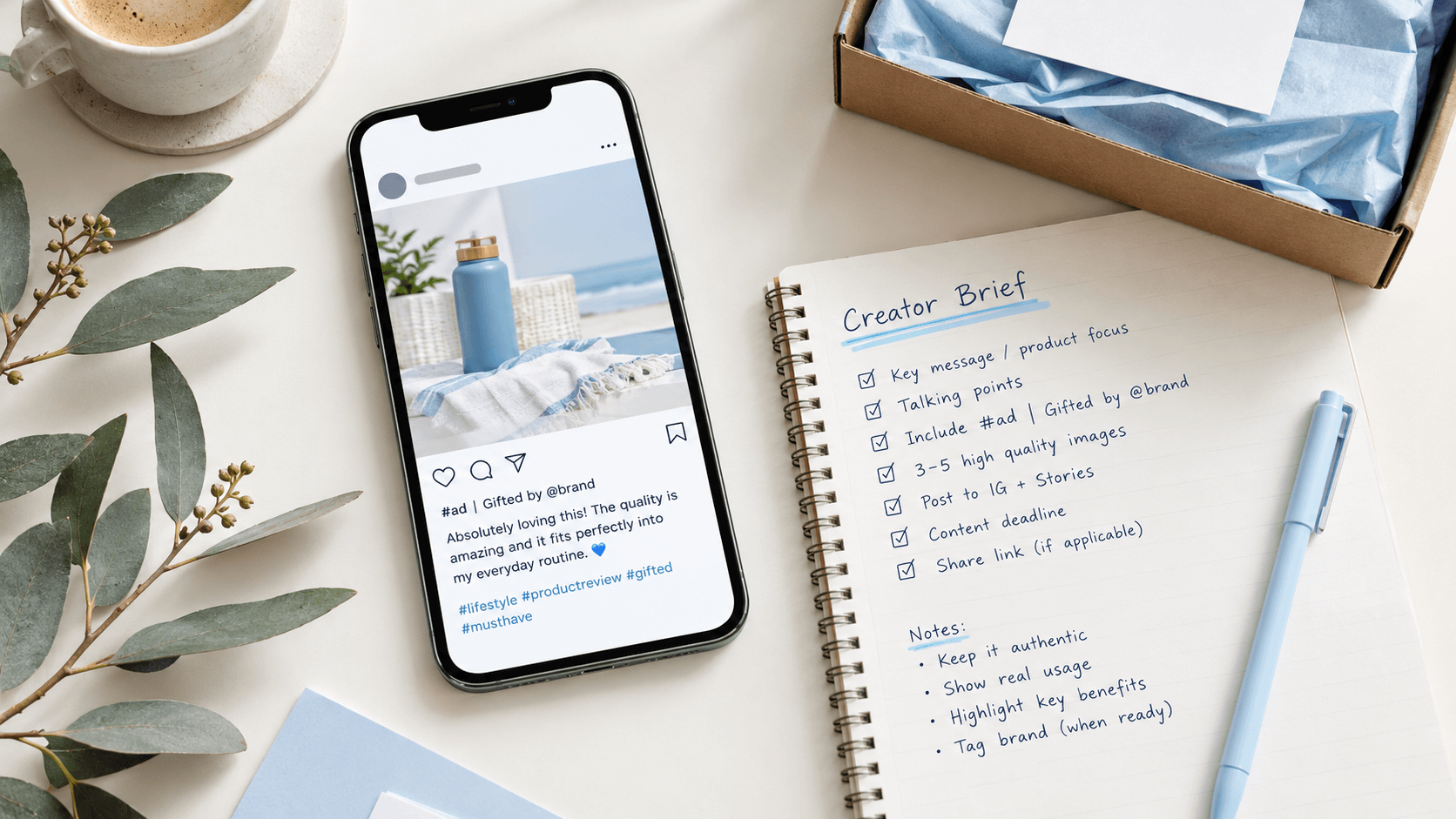
Brands that run gifted influencer campaigns gain not just awareness and conversions but a library of authentic, platform-native content they can repurpose across their own channels. Creator-made UGC (user-generated content) consistently performs well on brand social accounts, in email campaigns, and in paid retargeting, often significantly better than studio-produced assets. Working with twenty creators can produce forty to sixty pieces of usable content across a single campaign, at a fraction of what a production shoot would cost.
The creative diversity is also valuable. Twenty different creators will interpret your product in twenty different ways, highlighting different features, speaking to different use cases, and reaching audiences through different emotional angles. No single brand brief can capture that range.
4. It’s More Cost-Effective Than Traditional Advertising
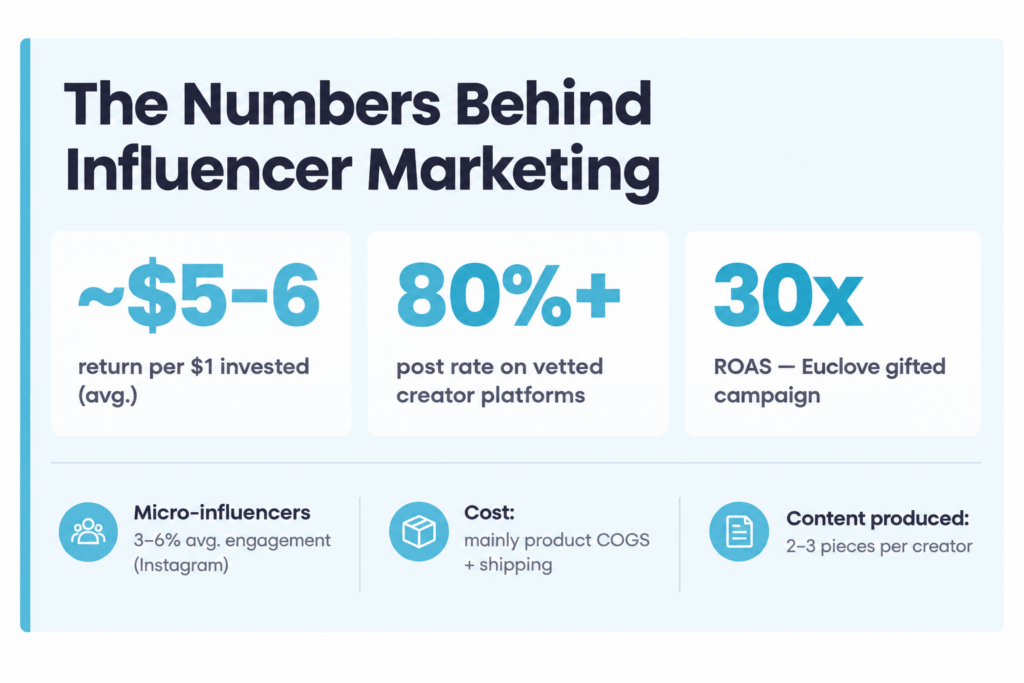
Compared to traditional advertising, television, print, radio, and even paid digital, influencer marketing offers a dramatically better cost-to-impact ratio. A gifted campaign with twenty micro-influencers can cost a brand $1,500–$3,000 in product cost and shipping, and generate content that reaches tens of thousands of engaged, targeted consumers who are already predisposed to your product category.
Achieving comparable reach through paid social advertising would typically cost five to ten times more, and the content would perform significantly worse because it lacks the authenticity signal that makes influencer content convert. For smaller Shopify brands that don’t have the budget for a full paid media programme, a gifted influencer campaign funded by product cost alone makes influencer marketing one of the most accessible growth channels available.
For a full breakdown of what different campaign types cost and what to budget across different brand sizes, see our guide to influencer marketing costs for Australian brands.
5. Influencer Marketing Delivers Measurable, Attributable ROI
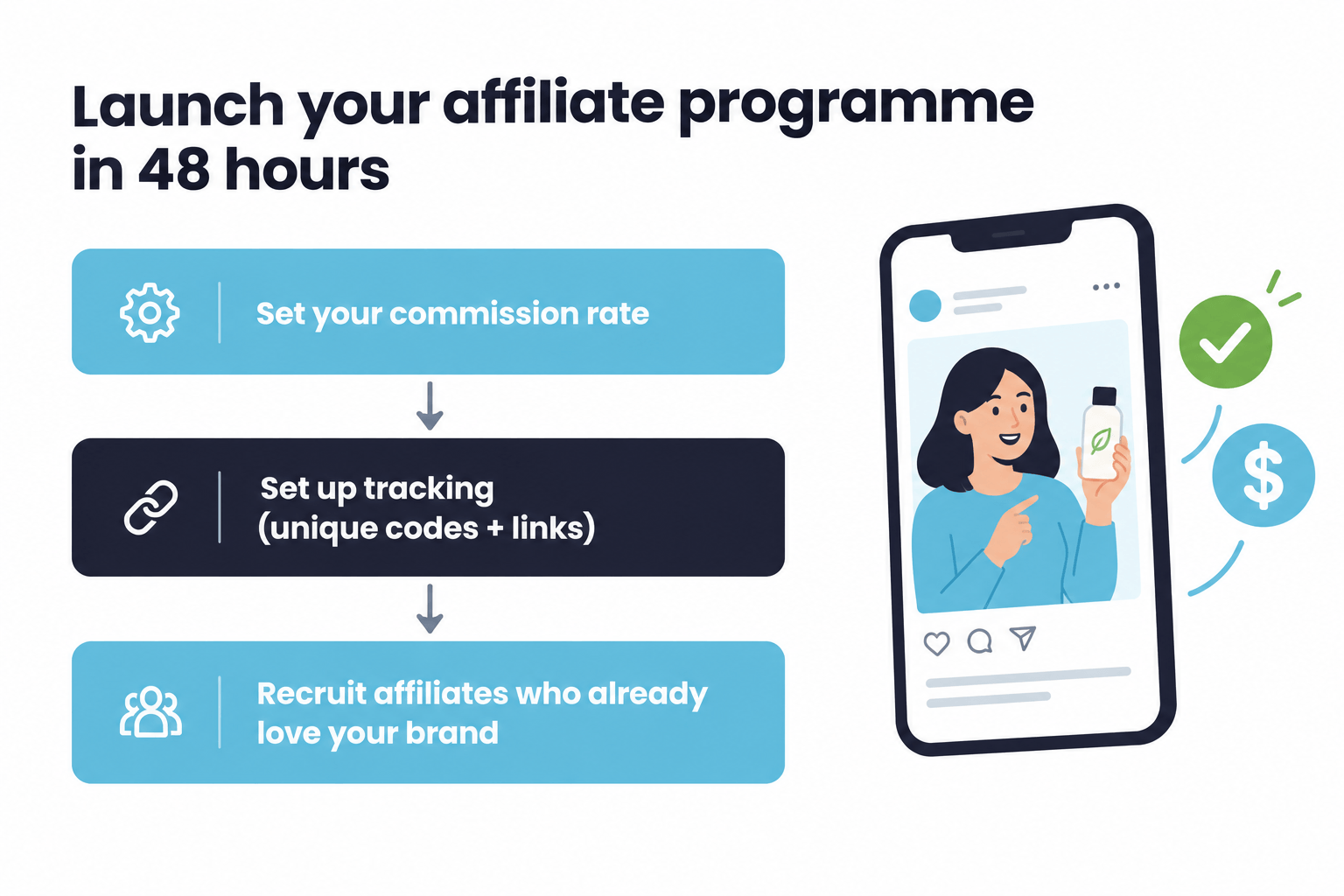
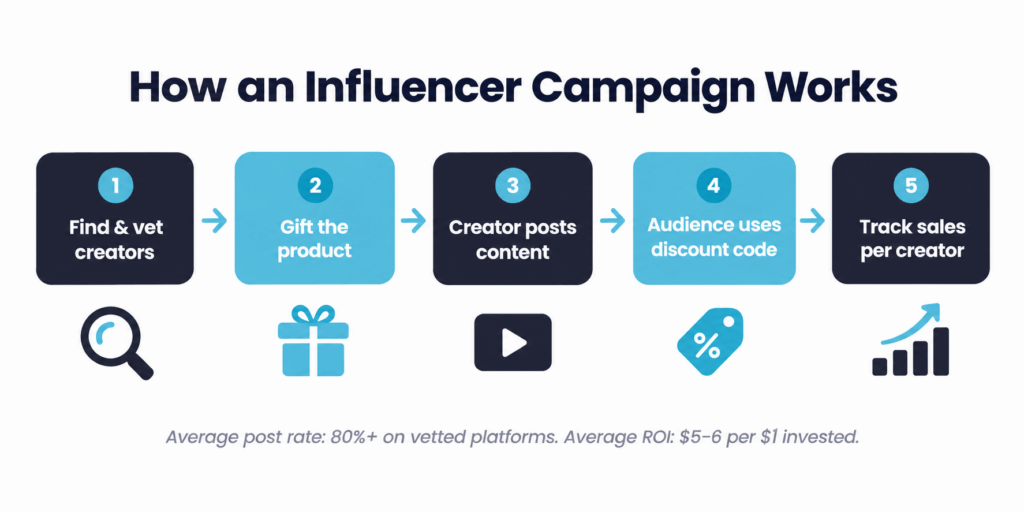
One of the most persistent myths about influencer marketing is that it’s difficult to measure. In 2026, this is no longer true. Modern campaign platforms assign each creator a unique discount code and referral link, making it straightforward to track exactly which creator drove which sale, what the total revenue was, and what the return on product cost looks like at a per-creator level, in real time.
Industry research consistently places influencer marketing ROI among the strongest of any digital marketing channel, with average returns commonly cited at around $5–6 for every dollar invested, with brands in beauty, wellness, and food performing even higher when creators are well-matched to the product. The critical shift of the past few years has been from impression-based reporting (“we reached 400,000 people”) to conversion-based reporting (“creator A drove 31 sales at $1,550 revenue, creator B drove 18 sales at $900 revenue”).
This shift makes affiliate-based influencer campaigns particularly compelling, creators earn commission on what actually converts, aligning their commercial incentive with your sales outcome rather than a flat fee for content that may or may not perform.
6. Influencers Drive Real Conversions – Not Just Impressions
Awareness is the first step, but conversion is the goal, and the best influencer campaigns deliver both. Creators who genuinely fit a product category know how to frame a recommendation in a way that makes their audience want to act: they speak to specific benefits, address the unspoken objections their audience has, and make the product feel immediately relevant to their followers’ lives.
This conversion mechanism is strongest when the creator has genuine product fit, when they actually use what they’re recommending rather than simply reading from a brief. Audiences recognise authenticity instantly, and the conversion rate reflects it. A creator who genuinely loves your product will consistently outperform one who is going through the motions, which is exactly why it’s worth thinking carefully about which campaign model – affiliate, gifted, or paid, aligns incentives most effectively for your brand’s goals.
For products in the consideration phase, where consumers need to understand what something does before they’ll buy it, creator content is also uniquely effective at education. A sixty-second Reel showing exactly how a product works, what results it delivers, and what the creator personally thinks of it does more for purchase intent than any product page description.
7. They Help You Reach New Markets Without Starting From Scratch
Every influencer brings a distinct community, and the right partnerships can introduce your brand to audience segments you’d otherwise struggle to reach through organic growth or paid acquisition. A brand selling eco-friendly home cleaning products might have an existing customer base in inner-city Melbourne, but partnering with regional creators, family lifestyle influencers in different states, or creators within specific communities opens entirely new markets.
This is especially valuable for product launches and new SKUs, where you need to generate rapid awareness and social proof across multiple audience segments simultaneously. Multiple micro-influencers posting across the same two-week window creates a “seen it everywhere” effect that paid advertising rarely achieves, because it appears organic rather than coordinated.
8. Long-Term Brand Advocates and Organic Growth Benefits
The most valuable influencer relationships extend well beyond a single campaign. Creators who genuinely love a product often continue mentioning it organically, without any campaign prompt or payment, because it has become part of their actual routine. These unpaid organic mentions are among the highest-value marketing outcomes available to a brand, and they’re only possible when the product fit was genuine from the start.
Repeat partnerships also compound in value. A creator whose audience has seen them mention your brand three times over twelve months has effectively placed your product in front of that audience at different stages of their buying journey, awareness, consideration, and purchase intent. By the third touchpoint, a meaningful portion of their audience is primed to act.
There are also meaningful SEO benefits. Influencer content that links back to your website from YouTube video descriptions, blog posts, and social bios contributes to your backlink profile and broader brand search visibility. The ACCC has noted that transparent influencer partnerships, where disclosures are clear and honest, build sustained consumer confidence in a brand over time. Properly disclosed campaigns aren’t just legally compliant; they’re also better for long-term brand reputation.
9. How Australian Brands Are Running Influencer Campaigns in 2026
The infrastructure for running influencer campaigns has improved dramatically in recent years, making what was once a manual, relationship-heavy process something a small team can manage efficiently at scale. Australian ecommerce brands now broadly use one of three approaches:
- Self-managed via a platform: Brands use a dedicated influencer marketing platform to access a vetted creator network, manage outreach and gifting, and track sales per creator. Referwo gives Australian brands access to 2,500+ verified creators with Australian audiences, with unique discount codes and referral links for per-creator attribution, all in one place.
- Full agency management: For brands that want end-to-end support – strategy, creator selection, brief development, campaign management, and reporting, Elinix AI’s influencer marketing service is built specifically for Australian ecommerce brands. Elinix AI is a Melbourne-based ecommerce marketing agency covering influencer marketing, email, SMS, and conversion rate optimisation, making it a natural fit for brands looking to embed influencer marketing into a broader growth strategy rather than run it in isolation.
- Hybrid model: Some brands manage creator relationships in-house using a platform while working with an agency for campaign strategy and reporting, combining the cost efficiency of self-management with specialist expertise.
Whichever approach you take, the barrier to entry for influencer marketing in Australia has never been lower, and the potential for attributable, compounding returns has never been greater. The brands not running creator campaigns today are ceding ground to those that are.
Explore what Referwo can do for your brand, or read our guide to choosing the best influencer marketing platform for Australian brands to see how different tools compare.
Frequently Asked Questions
What is influencer marketing and how does it work?
Influencer marketing is a form of marketing where brands partner with creators, people who have built an engaged audience on social media platforms, to promote their products or services. Brands provide a product (gifted campaigns), a fee (paid campaigns), a commission on sales (affiliate campaigns), or a combination. The creator then produces authentic content for their audience featuring the brand. Results are tracked through unique discount codes, referral links, and platform analytics.
How much does it cost to work with influencers in Australia?
Costs vary significantly by campaign type and creator tier. A gifted micro-influencer campaign can cost as little as your product COGS plus shipping, often $500-$3,000 to reach 10-30 creators. Nano-influencers typically don’t charge a posting fee for gifted products. Micro-influencers (10K-100K followers) may charge $150-$800 per post. Macro-influencers and paid campaigns run significantly higher. For a full breakdown by tier and campaign type, see our guide to influencer marketing costs for Australian brands.
What type of influencer works best for an ecommerce brand?
For most Australian ecommerce brands, micro-influencers (10K-100K followers) and nano-influencers (1K-10K followers) deliver the strongest combination of reach, engagement, and authenticity. Their audiences are tighter and more trusting, their engagement rates are higher, and they are often accessible through gifting alone, no fee required. The best influencer for your brand is the one whose audience already fits your target customer profile, regardless of follower count.
How do you measure the ROI of influencer marketing?
Modern influencer platforms track ROI through unique discount codes and referral links assigned to each creator. When a customer uses a creator’s code at checkout, the sale is attributed to that creator, giving you revenue figures, order counts, and per-creator ROAS (return on ad spend) in real time. This moves reporting from impression-based (“we reached X people”) to conversion-based (“creator A drove $1,200 in sales this month”), making it straightforward to identify your best-performing creators and reinvest accordingly.
Is influencer marketing worth it for small brands with limited budgets?
Yes, in fact, gifted influencer campaigns are one of the most accessible marketing channels for small brands precisely because the upfront cost is primarily product cost rather than media spend. A brand with a $300 product budget can send samples to five nano-influencers and generate authentic content reaching thousands of targeted consumers. If two of those creators drive sales with their discount codes, the campaign pays for itself. The key is selecting creators with genuine fit and verified Australian audiences rather than chasing large follower counts.
Do influencers need to disclose gifted products in Australia?
Yes. Under the Australian Consumer Law (ACL), enforced by the ACCC, influencers must clearly disclose any commercial arrangement, including receiving free products, that could influence the content they create. Acceptable disclosures include #gifted, #ad, #sponsored, or plain-language statements in the post caption. Disclosures must be clear and prominent, not buried in a sea of hashtags. Both the brand and the creator share compliance responsibility, so brands should confirm disclosure requirements before any campaign begins.
What is the difference between a gifted campaign and a paid influencer campaign?
In a gifted campaign, the brand provides a free product in exchange for content, there is no fixed posting fee. The creator posts at their discretion (though most will commit to posting as part of the arrangement). In a paid campaign, the brand pays a fixed fee per post, guaranteed content deliverables, and often more creative control. Most successful Australian Shopify brands start with gifted campaigns for reach and authenticity, then identify their best-performing creators for paid or affiliate arrangements. See our full breakdown of gifted, affiliate, and paid campaign models to choose the right fit.
How do I find influencers for my Australian brand?
You can find influencers through manual Instagram or TikTok searches, by looking at who already follows or tags your brand, or by using a dedicated platform like Referwo that maintains a pre-vetted database of Australian creators with verified audience data. Manual searching is time-intensive and lacks audience verification; platforms give you filtered access to creators by niche, follower size, engagement rate, and audience location, and handle outreach and campaign tracking in the same workflow. Read our guide on how to find micro-influencers for your brand for a step-by-step approach.
About the author: Ewen Ling is the co-founder of Referwo, an influencer marketing platform built for Australian ecommerce brands, and the founder of Elinix AI, a Melbourne-based ecommerce digital marketing agency. With 16 years of hands-on experience in ecommerce and digital marketing, Ewen works with Shopify brands across Australia to build creator programmes that generate attributable revenue – not just awareness.