
By Ewen Ling, Co-Founder, Referwo | Ecommerce Growth Strategist
Last updated: November 2026
Quick answer: An influencer campaign brief template is a one-page document that tells creators what to make, what to say, how to disclose the ad and when to post. A good brief covers about 10 sections, from the goal to usage rights. On Referwo, the brief is the campaign creators read before they apply, and plans start at US$69 a month with a 14-day free trial.
A lot of disappointing influencer content starts with a vague brief. You send a product, the creator posts a flat lay photo when you wanted a Reel, the key feature never gets a mention, and nobody added #ad. Missing instructions make those mistakes far more likely.
A clear brief helps prevent these problems before the product ships. It tells creators who the product is for, what to show, the one message that matters, what format you need and the rules they must follow. It also helps creators decide whether the campaign suits them.
This guide is for e-commerce brand owners in Australia running gifted and affiliate campaigns themselves. It gives you a free influencer campaign brief template to copy, a worked example, the differences between gifted, affiliate and paid briefs, and the Australian disclosure and usage rights points every brief needs. You can see how briefs, creator applications and sales tracking sit together on our influencer platform for brands.
Key facts
- Cherub Baby gave creators detailed campaign briefs to keep content consistent with the brand, and tracked $34,855 in sales from 119 creators at 11.6x ROAS (Referwo case study).
- In a 2023 ACCC sweep of 118 influencer accounts, 81% made posts that raised concerns, and the most common issue was not disclosing brand relationships (ACCC, December 2023).
- The ACCC sweep checked whether followers could tell a creator was receiving payment, gifts or other incentives (ACCC, December 2023).
- As a general rule, the creator is the first owner of copyright in content they make, unless they have assigned it in advance (Copyright Agency).
What is an influencer campaign brief?
An influencer campaign brief is a short document that explains a collaboration to a creator before they make any content. It sets the goal, the product, the audience, the content you need, the key message, the disclosure rules, the deadlines, what the creator receives and how you can reuse the content. A brief guides the creator without writing the post for them.
Influencer brief: the written instructions a brand gives a creator for one campaign, covering what to make, what to say and when to post.
On Referwo, the brief is also your campaign listing. Creators read it before they apply, so it does two jobs. It attracts creators who suit the product, and it sets expectations for the ones you approve. A brief that says “Reels only, 30 to 60 seconds, filmed at home” puts off creators who only post photos, and that saves you approving the wrong people.
Cherub Baby, an Australian baby products brand, provided detailed campaign briefs so creator content stayed consistent with the brand. The brand’s 119 creators made 180+ posts, stories and Reels, and you can read how Cherub Baby tracked $34,855 in sales from 119 creators. Those numbers are one brand’s past results, not a promise for yours.
What should an influencer brief include?
A complete influencer brief includes 10 sections: campaign goal, product details, target audience, content format, key message, must-include and must-avoid points, disclosure, timeline, what the creator receives, and usage rights. Most briefs fit on one page. If a section takes more than 3 or 4 lines, cut it back, because creators skim.
| Section | What it answers for the creator | Common mistake |
|---|---|---|
| Campaign goal | Why the campaign exists (sales, content, awareness) | No goal, so every creator guesses |
| Product details | What it is, what makes it different, how to use it | A long product history nobody reads |
| Target audience | Who the product is for | “Everyone” as the audience |
| Content format | Platform, format, length, how many pieces | Asking for “content” with no format |
| Key message | The one thing followers should remember | Five messages competing for 30 seconds |
| Must include and must avoid | Tags, code, claims to use and claims to skip | Forgetting the discount code or brand tag |
| Disclosure | How to label the post as an ad | Leaving it to the creator to decide |
| Timeline | When to post after the product arrives | No deadline at all |
| What the creator receives | Gifted product, commission rate, paid fee | Unclear value, so strong creators pass |
| Usage rights | Where and how long you can reuse the content | Reposting in ads without agreeing first |
The goal shapes everything else. A sales goal needs a discount code and a clear reason to buy now. A content goal needs good lighting and several angles. If you also want raw clips, say how to send them (file type, upload link and deadline). Pick one main goal per campaign and say it in the first line of the brief.
Our guide to vetting influencers before you approve them covers what to check once applications start coming in.
Free influencer campaign brief template (copy and paste)
This free influencer campaign brief template covers the 10 sections in the order creators read them. Copy the list below into your campaign and replace each prompt in brackets with your own details. Keep every answer to a line or two. A filled-in example follows the template.
Influencer campaign brief template
- Campaign goal: (one sentence on what this campaign is for, and how you will measure it)
- Product: (name, link, what makes it different, how to use it)
- Who it’s for: (your customer, in plain words)
- Content to make: (platform, format, length, number of pieces)
- Key message: (the one thing followers should remember)
- Must include and please avoid: (tags, code and shots you need; claims, competitors and topics to skip)
- Disclosure: (the exact ad label to use and where it goes)
- Timeline: (when to post after the product arrives; if you want drafts, when to send one, who approves it and how fast you will reply)
- What you receive: (Gifted: the product. Affiliate: the commission rate, follower discount, how long the code runs, and when commission is paid after returns are checked. Paid: the fee, when you pay it and how many revisions are included.)
- Usage rights: (where you may reuse the content, for how long from the posting date, and what edits you may make)
Keep the order. Many creators decide whether to apply from the first few lines, so the goal, the product and the content ask come first.
Worked example: a gifted skincare brief
Here is the same template filled in for a made-up gifted vitamin C serum. The asks stay small because the creator’s only reward is the product.
| Section | Example answer |
|---|---|
| Campaign goal | Get honest video reviews of our new vitamin C serum. Success: at least 10 approved creators post a Reel within the timeline (an example target) |
| Product | A lightweight vitamin C serum for dull skin. Use 2 to 3 drops after cleansing, morning only |
| Who it’s for | Women aged 25 to 45 with a simple morning skincare routine |
| Content to make | 1 Instagram Reel, 30 to 60 seconds, filmed at home in natural light |
| Key message | It fits into a busy morning in under a minute |
| Must include and please avoid | Tag the brand, show the texture on skin. No medical claims (such as “cures acne”) and no other skincare brands in frame |
| Disclosure | Use the platform’s paid partnership label where available and put #ad at the start of the caption |
| Timeline | Post within 14 days of the product arriving |
| What you receive | A full-size serum, gifted |
| Usage rights | We may repost the Reel on our Instagram and website with credit for 6 months from the posting date. We may trim it and add captions, but won’t change what you say. Any use in paid ads needs a separate agreement and fee |
If you want raw clips or paid ad usage as well, add a commission or a fee and agree the terms in writing first. For an affiliate version, add the creator’s unique discount code and commission rate to “What you receive”.
Try it on your next campaign. Paste the template into a gifted or affiliate campaign, request usage rights at setup, and approve only the creators who fit. You can start a 14-day free trial on Basic or Standard with no lock-in contract.
How is a gifted brief different from an affiliate brief?
A gifted brief trades product for content, so the creator’s reward is the product itself, and the asks should stay in proportion to the product’s value. An affiliate campaign pays commission on eligible code sales. Returned or refunded orders don’t count. So an affiliate brief needs the commission rate, the code and a clear reason for followers to buy. A paid brief adds a fee, a draft review and revision terms.
Read more on how affiliate, gifted and paid influencer campaigns compare if you haven’t picked a model yet.
| Brief section | Gifted campaign | Affiliate campaign | Paid campaign |
|---|---|---|---|
| What the creator receives | The product | Commission per code sale (often with gifted product) | A fee, plus product |
| Content ask | Keep it in proportion to the product value | 1 post, plus any extra mentions agreed up front | Exact deliverables, agreed in writing |
| Discount code | Optional | Essential, one unique code per creator | Usually included |
| Draft review and revisions | Light touch | Light touch | Agreed rounds of revisions |
| Usage rights | Ask at setup, keep it modest | Ask at setup | Spell out channels, ads and duration |
Watch the size of the ask on gifted campaigns. A product worth $50 rarely justifies a Reel, a carousel, raw clips and 12 months of ad usage. If you need all of that, add a commission or a fee, or cut the ask down to what matters most.
On Referwo, gifting runs through your own store. Approved creators order the product with a single-use code and enter their own address, and your team still packs and sends the order like a normal sale. Each creator also gets a unique discount code, so every sale through that code is tracked back to them. Brands pay no commission to Referwo on those sales. Creators pay a 15% platform fee on what they earn from affiliate and paid work.
How do you write content asks that creators get right?
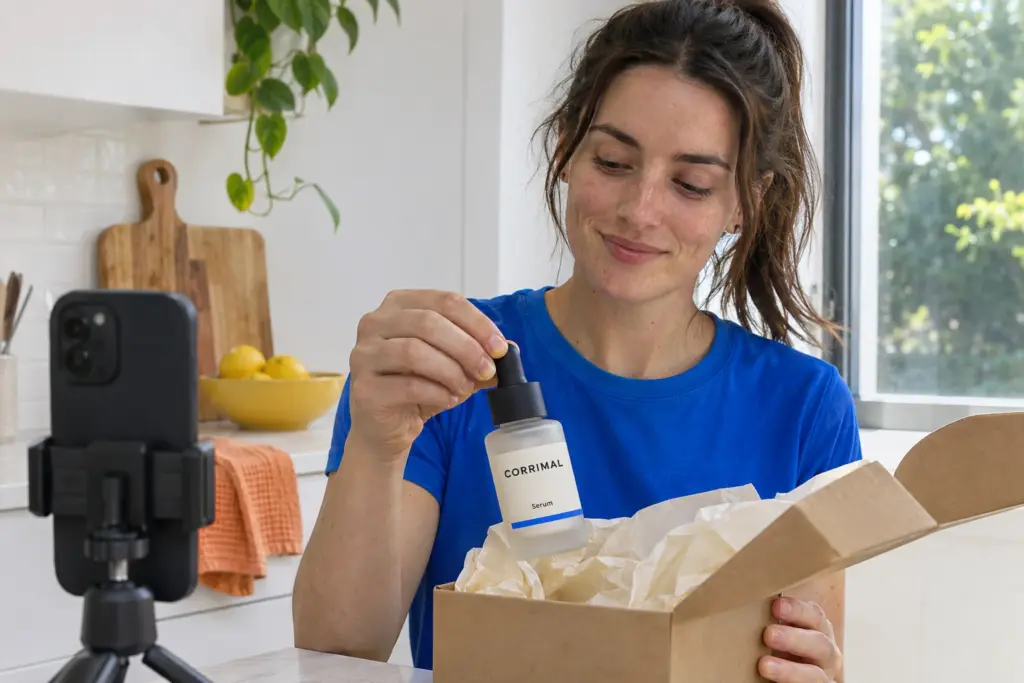
Write content asks as specific instructions with room for the creator’s own style. Name the platform, format and length. Say what must appear on screen, such as the product in use. Give one key message, not five. Then leave the script, the hook and the setting to the creator. A creator’s normal voice usually comes across as more believable than lines written by the brand.
Four habits make your instructions clearer:
- Name the format in plain words. Write “Instagram Reel, 30 to 60 seconds” rather than “social content”. If you want video for ads, say “video only, no photos”.
- Show, don’t list. Ask creators to show one feature in use instead of reading out a feature list.
- Give one message. Followers are more likely to remember one clear point than a list of them.
- Share an example, not a script. Link one post you like and say what you like about it. Avoid writing word-for-word lines unless a claim must be exact.
A common failure is the photo problem. A brand wants video for Meta ads, the brief says “content”, and most creators send photos. Sole Sox prioritised video content, especially Reels, to show product use and features, according to the Sole Sox case study. If video matters to you, put it in the first lines of the brief.
Set a posting window too. A deadline such as “within 14 days of the product arriving” gives creators a clear target. On Referwo, you can flag creators who miss deadlines or deliver off-brand content, and flags can lead to warnings or removal from the platform.
What disclosure and usage rights must an Australian brief cover?
Every Australian influencer brief should tell creators how to label the post as advertising and set out how you can reuse their content. Gifts count as a brand relationship, not only paid deals. The creator owns their content by default, so get usage rights agreed in writing before you put a creator’s video in your ads.
Disclosure: say exactly how to label the ad
The ACCC looked at 118 influencer accounts in early 2023, and 81% made posts that raised concerns. The most common issue was creators not disclosing that they received payment, gifts or other incentives. Brands were also a focus of the sweep, because of their role in setting up influencer posts. So disclosure belongs in your brief, not only in the creator’s head.
Under section 2.7 of the AANA Code of Ethics, advertising shall be clearly distinguishable as such. Ad Standards suggests labels such as #Ad, #PaidPromotion, #sponsored and #CommercialPartnership in its guide to disclosing ad content. Write the label you want into the brief, and ask for it at the start of the caption where people see it. Our guide to influencer gifting rules in Australia goes deeper on gifted posts.
Usage rights: agree them before you run ads
As a general rule, the creator is the first owner of copyright in a work they make, unless they have assigned it in advance. Reposting a creator’s Reel in a paid ad without agreement can damage the relationship, and may breach their copyright.
Put usage rights in the brief so creators know before they apply. Name the channels (organic social, website, email, paid ads), the time period, and whether you can edit the video. On Referwo, you request content usage rights when you set up the campaign. This guide is general information, not legal advice, so ask a lawyer about anything unusual.
How do you use the brief once the campaign is live?
Once the campaign is live, the brief becomes your checklist. Use it to approve creators whose past posts already match the format you asked for, to check each post against the must-include list, and to judge results against the goal you set in the first line. Then update the brief for the next campaign with what you learned.
Here is a simple loop that works for gifted and affiliate campaigns:
- Post the campaign with your brief, product and usage rights request.
- Approve creators whose recent posts show they can make the format you asked for. Basic allows up to 15 creator approvals a month and Standard allows up to 50.
- Check each post against the must-include list: code, tag, disclosure label and key shots.
- Track code sales by creator through your Shopify or WooCommerce store.
- Invite the best creators back and update the brief with what worked.
Cherub Baby kept every approved creator’s affiliate discount code active after the first campaign ended, and the case study says those codes continue to bring in orders. Commission is paid only after a verified sale, and live codes mean later sales from older posts can still be tracked to each creator.
Over time, clear briefs also bring good creators back. Every campaign adds creators to your community. The ones who love your product come back, post again and bring their followers with them, and every sale through their code stays tracked. Our guide to building a brand community with micro-influencers shows how to turn your best creators into regulars.
Short on time? Referwo Premium costs US$399 a month and starts with a 15-minute demo call. Your account manager writes and publishes the campaign brief, manages creators and asks for revisions when content doesn’t meet the brief.
Frequently asked questions
What should be included in an influencer brief?
An influencer brief should include the campaign goal, product details, target audience, content format, one key message, must-include and must-avoid points, disclosure instructions, a posting timeline, what the creator receives and usage rights. Keep each section to one or two lines so the whole brief fits on one page.
How long should an influencer brief be?
One page is enough for most gifted and affiliate campaigns. Creators often skim several campaigns before applying, so put the goal, the product and the content ask at the top. A paid campaign with ad usage, draft reviews and revisions may need a short written agreement as well as the brief.
Should I give influencers a script?
Usually not. A word-for-word script tends to sound like an ad, and a creator’s normal voice usually comes across as more believable. Give one key message, the shots you need and an example post you like, then let the creator write it. Only give exact wording when a claim must be stated a certain way.
Do gifted influencer posts need to be labelled as ads in Australia?
Yes. When a creator gets a free product to promote, that is a brand relationship followers should know about. The ACCC’s 2023 sweep looked at whether followers could tell a creator was receiving payment, gifts or other incentives. Put the label you want in your brief, such as #ad at the start of the caption or the platform’s paid partnership tool.
Can I use influencer content in my ads?
Only if the creator agrees. As a general rule, the creator owns copyright in content they make unless they assign it. State the channels, the time period and any editing in your brief, and get agreement in writing before you run a creator’s video as a paid ad.
Write your first brief this week
A brief shapes every post that follows, so it is worth getting right before the product ships. Copy the template, cut it to one page, and judge each campaign against the goal in the first line. Ready to put your brief in front of creators who apply to you? Start your free Referwo trial on Basic or Standard, with no lock-in contract.
Sources
- Referwo, Cherub Baby case study: https://referwo.com/case-studies/cherub-baby
- Referwo, Sole Sox case study: https://referwo.com/case-studies/sole-sox
- ACCC, Social media influencer testimonials and endorsements: findings of the internet sweep, December 2023: https://www.accc.gov.au/system/files/social-media-influencer-testimonials.pdf
- Ad Standards, Distinguishable advertising (AANA Code of Ethics section 2.7): https://adstandards.com.au/issues/distinguishable-advertising/
- Ad Standards, Influencer marketing: a guide to disclosing ad content: https://adstandards.com.au/article/influencer-marketing-guide-disclosing-ad-content
- Copyright Agency, Ownership: https://www.copyright.com.au/about-copyright/ownership/