
By Ewen Ling, Co-Founder, Referwo | Ecommerce Growth Strategist
Last updated: November 2026
Quick answer: Influencer marketing for pet brands in Australia usually starts with gifting your product to dog and cat creators who film their own pets using it. Send product to 15 to 50 creators, give each one a unique discount code, and keep working with the ones who sell. Referwo plans start at US$69 a month, with a 14-day free trial.
Pet products are made for show and tell. A dog either loves the new chew or walks away from it. A cat either sleeps in the new bed or sits next to it in the box. Pet owners know this. A short video of a real pet trying a product shows the product being used in an everyday home, by an animal the viewer can relate to.
This guide is for pet brand owners who want those videos to turn into sales they can track. It covers which creators to pick, what to ask them to film, how to use affiliate codes, the claims rules that apply to pet products, and what it costs. You can see how campaigns are set up on our platform for brands.
Key facts
- 73% of Australian households now have at least one pet, around 7.7 million homes with an estimated 31.6 million pets (Animal Medicines Australia, Pets in Australia 2025).
- Australians spend an estimated $21.3 billion a year on their pets, with food making up $9.8 billion of that (Animal Medicines Australia, 2025).
- 45.9% of survey respondents use promo or discount codes to measure influencer results (Influencer Marketing Hub, 2026).
- Pet supplements that claim to treat or cure a condition generally need registration with the Australian Pesticides and Veterinary Medicines Authority (APVMA), and that covers claims in promotional material too.

Why does influencer marketing work for pet brands?
Influencer marketing works for pet brands because owners want proof that a real animal likes the product before they buy it. A creator video shows the pet’s reaction, the size of the product next to the animal, and how it holds up after a week. That answers the questions a pet owner asks: will my dog eat it, will it fit my cat, will it last?
It is a big market, and it is still growing. According to Animal Medicines Australia’s Pets in Australia 2025 report, 73% of Australian households have a pet, up from 69% in 2022. Dogs are in 49% of households and cats in 34%. Australians spend an estimated $21.3 billion a year on their pets, with $9.8 billion on food and $1.4 billion on products and accessories.
Pet products also have a built-in reason to post again. Food and treats run out and get reordered. Toys get destroyed and replaced. A new season brings a new jacket, a cooling mat or a flea and tick reminder. Each one gives a creator a fresh, honest reason to mention you again to the same followers. That is how one campaign becomes a group of creators who keep posting.
Which creators should a pet brand work with?
Pet creators with 2,000 to 50,000 followers are a useful starting point for most pet brands. Many of them post for owners of the same kind of animal. On Referwo, creators apply to your campaign, and you can also browse the Explore page and invite creators you like, or invite creators you found yourself to apply. Look for creators whose pet matches your product. Check that their audience includes Australian owners of the pets your product suits. Then read their comments before you approve them.
Match the creator to the product, not just the word “pet”:
- Dog food and treats: creators whose dog appears in most posts, ideally a breed or size your product suits.
- Cat products: cat accounts and owners who post at home. Cats are harder to film, so creators who already do it well are worth more.
- Toys and enrichment: high-energy dogs, puppy accounts and creators who post training or play videos.
- Beds, bowls and accessories: home and lifestyle creators who have a pet in their space, not only pet-only accounts.
- Grooming and coat care: groomers, breed accounts for long-coated dogs, and owners who post bath day content.
- Pet tech and travel gear: creators who walk, hike, road trip or take their pet to cafes.
Look at the creator’s last 10 posts before you approve them. You want a pet that looks healthy and relaxed, real comments from owners asking questions, and products shown in a normal home. Our guide on how to vet influencers before you work with them covers the full check, including fake followers and red flags.
Do you need a famous pet account?
No. Large pet accounts can bring reach, but they often charge a fee and post many brand deals. For a small pet brand, working with 20 to 30 smaller creators can help you test different audiences and content styles before you spend on one big account. If you want to know more about the wider trend, our earlier post on the rise of pet influencers looks at how pet accounts grew.
What content should you ask pet creators to make?
Ask for short videos that show the pet trying the product for the first time, then using it again a few days later. A “first reaction” clip followed by an “after one week” clip is honest and easy for owners to trust. If you also want photos for your website and emails, ask for them in the brief.
Keep the ask in proportion to what you send. A small bag of treats doesn’t cover two Reels, a photo set and ad rights. Pick the one or two pieces you need most, or offer a fee or a higher commission for extra content and usage.
Formats that suit pet brands:
| Content format | Works best for | What to ask for in the brief |
|---|---|---|
| First reaction Reel or TikTok | Food, treats and toys | The pack opened on camera and the pet’s real first try |
| One week later follow-up | Food, beds and toys | The same product after a week of normal use |
| Day in the life | Accessories and travel gear | The product used naturally across a walk, meal or nap |
| Before and after | Grooming and coat care | Same light and angle, no filters, no edits to the coat |
| Size and fit check | Collars, harnesses and beds | The pet’s breed or weight and how the size was chosen |
| Stories with a link | Repeat sales | The discount code on screen and a reminder before restock |
Be clear about format in your brief. If you need video, say so, rather than leaving the format open. If you want videos you can run as ads, write “Reels only, vertical video” in the brief and ask for usage rights at campaign setup.
Agree these points in the brief before you send any product:
- What the creator will post, and by when.
- Where you can reuse the content (your website, email, social, paid ads) and for how long.
- That the pet’s safety comes first: no forcing a pet to wear, eat or use something it clearly doesn’t want.
Sending product alone doesn’t secure a post, so creators should know what they are agreeing to before the parcel goes out.

Try it with your next product: On Referwo, creators apply to your campaign. Approved creators order their gifted product from your store with a single-use code, and you pack and send it as a normal order. Each creator also gets a unique discount code, so you can see who drives sales. Start with the 14-day free trial on Basic (US$69) or Standard (US$99), with no lock-in contract. A card is needed to start the trial, and billing begins when it ends unless you cancel.
How do affiliate codes turn one pet post into repeat sales?
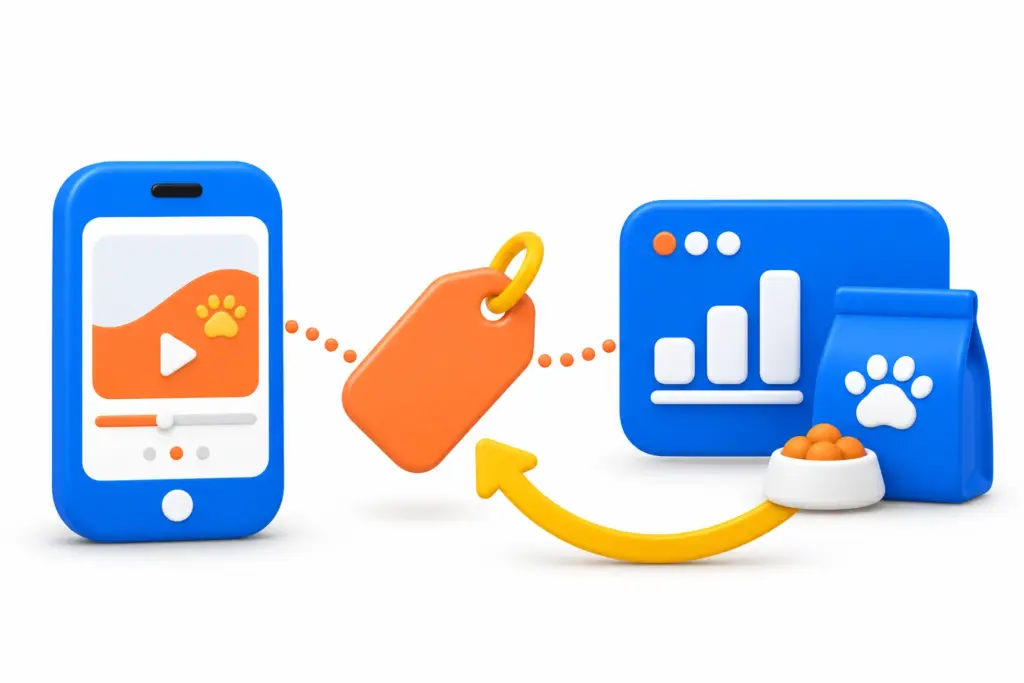
A unique discount code for each creator shows you which creators’ codes bring in orders, and it gives them a reason to keep sharing your product. Codes don’t catch everything: some buyers skip the code, and some codes get shared beyond the creator’s own followers. On Referwo, each creator earns a commission on every purchase made with their code, at a rate you set. For a pet brand, that matters most for products people buy again, such as food, treats, litter and grooming supplies.
Codes were also the most reported tracking method in one large 2026 survey. According to Influencer Marketing Hub’s Benchmark Report 2026, 45.9% of survey respondents use promo or discount codes to measure influencer results, ahead of affiliate links at 26.0%.
A simple way to use codes for repeat products:
- Gift a full-size pack, not a sample, so the pet has time to get used to it.
- Ask for a follow-up post when the pack is nearly empty, with the code on screen.
- Set a code discount your margin can carry on a repeat order, not only on the first one.
- Remind buyers the code works on reorders. A repeat order only counts towards a creator if the customer uses their code again.
- Check sales by code each month. Look at first and repeat orders separately.
- Work out profit, not just revenue. Start from tracked sales after the code discount. Take off returns, commissions, and the product and shipping cost of those orders. Then compare that with the campaign cost: gifted stock, postage and the platform.
- Invite the creators whose codes keep selling into your next campaign.
We don’t have a pet brand case study to share yet, so here is what gifting and codes have done for two small Australian brands in another category.
Hannah & Henry, a nappy bag brand, ran a gifted campaign with 119 creators. Through creator discount codes, it tracked nearly $44,000 in sales at 5.2x return on ad spend (ROAS).
Sole Sox, a small kids footwear brand, worked with 127 creators. It tracked about $10,000 in sales at 6.5x ROAS.
These are past results from two brands, not a promise of what any campaign will do. You can see more on our case studies page.
Return on ad spend (ROAS): tracked sales divided by campaign spend. A 5.2x ROAS means $5.20 in tracked sales for each $1 of spend counted in that case study.
What rules apply when creators promote pet products in Australia?
Two sets of rules matter most. Under Australian Consumer Law, any post a creator makes in return for free product or payment must be clearly labelled as advertising, for example with #ad. And if your product is a supplement, treat or care product, health claims can change how it is regulated, even when the claim is made by a creator rather than on your label.
The Australian Competition and Consumer Commission (ACCC) checks disclosure closely. In its December 2023 sweep, 81% of 118 influencers reviewed made posts that raised concerns under the Australian Consumer Law, and missing disclosure was the most common problem. The brand shares responsibility, not just the creator.
Health claims are the bigger risk for pet brands.
The APVMA’s guidance on animal feed products sets out a few ways a pet food or supplement can be excluded from registration. One is for simple nutritional supplements that make no claims on their label or promotional material beyond supplementing a diet where levels may be low. Another covers some nutritional or digestive products that meet ingredient, manufacturing and labelling rules, where any treatment claim is backed by strong scientific evidence.
Outside those paths, supplements represented as able to cure a condition or disease generally need registration.
So “my dog loves these with dinner” is a normal creator post, but “this fixed my dog’s itchy skin” about your supplement can count as a therapeutic claim in your promotion. The same APVMA page links to examples of acceptable nutritional messages you can check your brief against.
What to put in your pet brief:
- A clear label at the start, such as “Ad” on screen or said out loud, not only at the end of the caption.
- A simple briefing policy: no claims that the product treats, cures or prevents a disease or condition. Some products are registered or excluded under specific APVMA rules, so check your own product’s status and permitted claims first.
- Keep nutritional and taste messages accurate, and in line with what you can back up and your product’s regulatory status.
- Honest results: no filters on coat or skin, and no before and after shots taken in different light.
- Feeding and safety guidance shown as it appears on the pack, and a reminder to check with a vet for health concerns.
Our post on influencer gifting rules in Australia covers disclosure in more detail. This is general information, not legal advice. Check the APVMA rules for your own product.

How much does influencer marketing cost for a pet brand?
For a gifted campaign, the main cost is your product and postage, plus the platform. A small pet brand gifting 30 bags of treats at an A$12 cost price, with A$10 postage each, spends about A$660 on stock and shipping. Add a platform plan: Standard at US$99 a month includes up to 50 approvals a month, enough for this 30-creator example. Basic at US$69 a month includes 15. Affiliate commissions are only paid on sales, at the rate you choose.
How the costs stack up on Referwo:
- Platform: Basic US$69 a month or Standard US$99 a month, both with a 14-day free trial. Premium is US$399 a month, fully managed by our team, and starts with a demo.
- Product and postage: your cost. Creators order through your own store with single-use gifting codes, and you pack and send each order.
- Commission: a rate you set, paid only when a creator’s code makes a sale.
- Customer discount: the discount on each creator’s code comes off your sale price, so set it with your margin in mind.
- Paid posts: optional, for creators who charge a fee.
Before you set the discount and commission, work out what one sale is worth to you after product cost, postage, the code discount and the commission. For food and treats, also think about what a repeat customer is worth over a year. That number tells you how generous you can be.
Brands pay no commission to Referwo on influencer sales. Creators pay a 15% platform fee on their affiliate and paid earnings. Basic includes 3 active campaigns and 15 creator approvals a month. Standard includes 9 active campaigns and 50 approvals a month, which suits a brand running separate dog and cat campaigns. There are no lock-in contracts on any plan. See every plan on the Referwo pricing page.
How do you build a creator community around a pet brand?
Think of your first campaign as the start of a creator community. Every campaign adds creators to your community. The ones who love your product come back, post again and bring their followers with them. For a pet brand, that could be a dog who appears in every new treat flavour, a cat account that tests each new bed, or a groomer who uses your shampoo on clients each week.
You don’t need a big system for this. After each campaign, sort creators by sales and content quality, thank your top 10, and invite them first to the next launch. Send them new flavours or sizes before anyone else. With the usage rights you agree at campaign setup, each repeat post also adds to content you can use in ads, emails and on your product pages. Our guide on building a brand community with micro-influencers shows how to keep that group growing.
Frequently asked questions
How can an Australian pet brand work with influencers?
Start with a gifted campaign to dog or cat creators whose pet suits your product. Send a full-size product to 15 to 50 creators, ask for a first reaction video (and a follow-up if the product value or a fee covers it), and give each creator a unique discount code so you can see who drives sales. On Referwo, creators apply to your campaign, so you choose who gets product. Basic (US$69 a month) allows 15 creator approvals a month and Standard (US$99 a month) allows 50, both with a 14-day free trial.
What type of influencer is best for a pet brand?
Pet creators with 2,000 to 50,000 followers are a good starting point for most pet brands, when their audience includes owners of the pets your product suits. Check their audience insights before you approve them. Match the creator’s pet to your product. Treats and toys suit active dogs, and beds and scratchers suit cat accounts. Grooming products suit long-coated breeds, and travel gear suits creators who take their pet out.
Can pet influencers say a product helps with health problems?
Be careful. Under APVMA guidance, pet supplements that claim to treat, cure or prevent a disease or condition generally need registration, and claims in promotional material count. Some products are excluded from registration if they meet specific APVMA rules on ingredients, labelling and claims. Ask creators to share their own pet’s experience without treatment or cure claims, and check the APVMA rules for your product.
Do pet influencer posts need to be labelled as ads?
Yes. If a creator posts in return for free product or payment, the post must be clearly labelled as advertising under Australian Consumer Law, for example with #ad or a clear on-screen label. The ACCC found 81% of 118 influencers it reviewed in 2023 made posts that raised concerns, with missing disclosure the most common problem.
How much does it cost to run an influencer campaign for a pet brand?
A gifted campaign costs your product and postage plus a platform plan. For example, 30 bags of treats at A$12 each, plus A$10 postage per parcel, is about A$660 before the platform. For 30 approvals in one month, choose Standard at US$99 a month, which includes up to 50. Basic at US$69 includes 15. Both have a 14-day free trial, and affiliate commissions are paid only on sales, at the rate you set.
Getting your first pet campaign live
Pet owners trust what they see other people’s pets enjoy, and they trust it more when the same creators keep posting about it. Start with one product, 15 to 50 creators and a code for each, then grow from the creators who sell. When you are ready to see which pets and owners drive your sales, start your 14-day free trial on Referwo.
Sources
- Animal Medicines Australia, Pets in Australia 2025 media release, 18 September 2025: https://animalmedicinesaustralia.org.au/wp-content/uploads/2025/09/250918-Animal-Medicines-Australias-Pets-in-Australia-report-show-nearly-three-quarters-of-Australian-homes-now-have-a-pet.pdf
- Influencer Marketing Hub, Influencer Marketing Benchmark Report 2026: https://influencermarketinghub.com/influencer-marketing-benchmark-report/
- ACCC, influencer and online review sweep media release, December 2023: https://www.accc.gov.au/media-release/scrutiny-of-influencers-and-businesses-for-misleading-advertising-and-online-reviews-continues
- APVMA, Animal feed products guidance: https://www.apvma.gov.au/registrations-and-permits/chemical-product-registration/animal-feed-products
- Referwo case studies (Hannah & Henry, Sole Sox): https://referwo.com/case-study