
By Ewen Ling, Co-Founder, Referwo | Ecommerce Growth Strategist
Last updated: October 2026
Quick answer: Influencer marketing for toy brands in Australia usually starts with parenting and family creators who film the product being played with. Gift your product to 15 to 50 creators, give each one a unique discount code, and keep the ones who sell. Referwo plans start at US$69 a month, with a 14-day free trial.
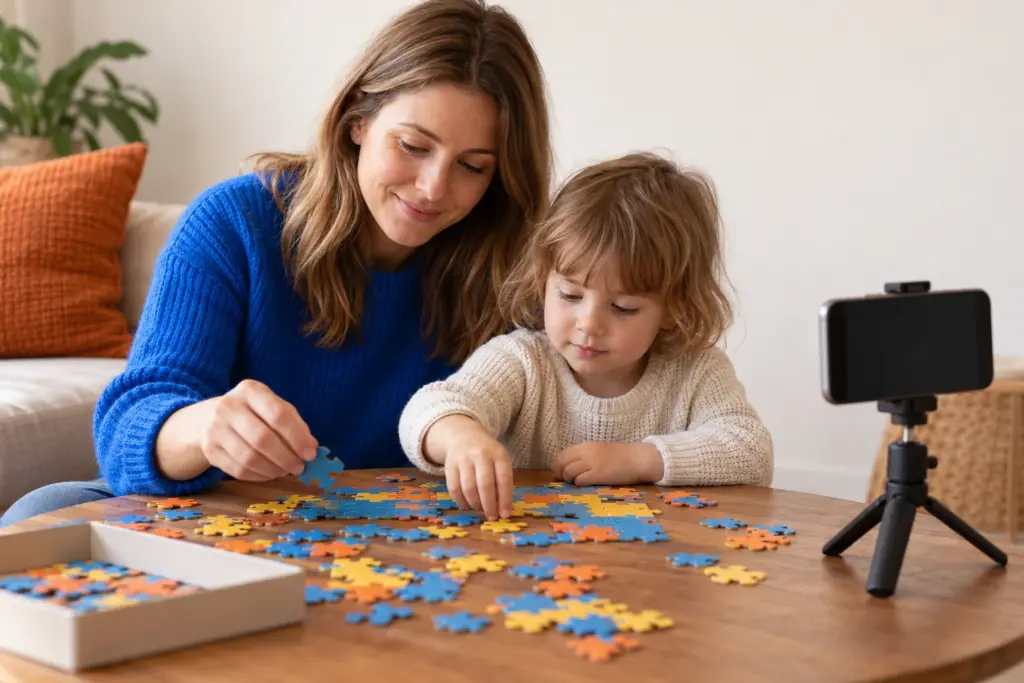
Toys, puzzles and games give creators something practical to show: people like watching the product being used. Think of a parent and child racing to finish a 500-piece puzzle, or a family arguing over the rules of a new card game. People stop scrolling for that, and it shows the product doing its job.
Turning those moments into sales you can track takes more planning. This guide walks through each step, from picking creators to the rules for ads aimed at kids. You can see how the campaign setup works on our platform for brands.
Key facts
- Australian toy sales rose 13% in value in the first half of 2026, and Games & Puzzles and Building Sets made up 70% of the category gains (Circana, August 2026).
- 45.9% of survey respondents use promo or discount codes to measure influencer results (Influencer Marketing Hub, 2026).
- Sole Sox, a small Australian kids brand, worked with 127 parenting creators on Referwo and tracked about $10,000 in sales at 6.5x ROAS (Referwo case study).
- Influencer ads aimed at children must make it “immediately clear” to a child that they are advertising (AANA Children’s Advertising Code, in force since 1 December 2023).
Why does influencer marketing work for toy, puzzle and game brands?
Influencer marketing works for toy, puzzle and game brands because parents buy toys they have seen other families enjoy. A creator video shows the box opened, the pieces, the play and the reaction in under a minute. That answers the questions a parent has before buying: is it fun, is it the right age, will it last past Boxing Day?
The category is also growing. According to Circana’s first-half 2026 report, Australian toy sales rose 13% in value compared with the first half of 2025. Games & Puzzles and Building Sets together made up 70% of the gains across Circana’s supercategories.
Toy brands also have a natural content loop. A puzzle gets finished and photographed. A board game gets a rematch. A building set gets a “what we made” post. Each one is a fresh reason for a creator to post again, which matters later when you want repeat content from the same people.
Which creators should a toy or game brand work with?
Parenting and family creators with 2,000 to 50,000 followers are a useful starting point for toy, puzzle and game brands. Their followers are often parents, grandparents and gift buyers, the people who actually pay. Check each creator’s audience location and age, and read their comments, before you approve them. Smaller creators also tend to reply to their comments, so questions like “what age is this for?” get answered in front of buyers.
Match the creator to the product, not just the niche:
- Baby and toddler toys: parents of children under 3, who film play time at home.
- Puzzles: creators who post slow, calm content, family nights in, or adult hobby puzzling.
- Board and card games: families with school-age kids, couples who host game nights, and teachers who post classroom activities.
- Educational and STEM toys: homeschooling parents and creators who share learning activities.
- Collectables and trading cards: hobby creators who open packs on camera (check the age of their audience first).
Look at the creator’s last 10 posts before you approve them. You want real play in their own home, comments from parents asking questions, and children who look relaxed rather than staged. Our guide on how to vet influencers before you work with them covers the full check, including fake followers and red flags.
Should you work with child creators?
Most toy brands are better off working with the parent as the creator, with the child appearing in play content the parent chooses to share. Accounts run for a child need extra care: the parent should hold the account, agree to the brief and sign off on anything that is posted. If your content is aimed at children, the AANA rules in the section below apply either way.
What content should you ask creators to make?
Ask for short videos that show the toy being played with from start to finish: the box, the first look inside, the play and the honest reaction. These “unbox and play” Reels and TikToks answer a buyer’s questions faster than photos. Photos are still useful for your website and email, so ask for 2 or 3 alongside each video.
Formats that suit toy, puzzle and game brands:
| Content format | Works best for | What to ask for in the brief |
|---|---|---|
| Unbox and play Reel or TikTok | All toys and games | The full box, the pieces, 20 to 40 seconds of real play |
| Time-lapse | Puzzles and building sets | Start to finished build, with the box in the first frame |
| Game night video | Board and card games | One full round, a clear rule explained, the winner’s reaction |
| “Is it worth it?” review | Higher-priced toys | Age range, how long it held attention, any downsides |
| Gift guide post | Christmas and birthdays | The product with 2 or 3 other ideas, and the creator’s code |
| Stories with a link | Repeat sales | The discount code on screen and a reminder before key dates |
Be clear about the format in your brief. If you ask for “content”, many creators will send photos. If you want Reels you can run as ads, write “Reels only, vertical video” in the brief and ask for usage rights at campaign setup.
Agree these points in the brief before you send any product:
- What the creator will post, and by when.
- Where you can reuse the content (your website, email, social, paid ads) and for how long.
- If a child appears, written permission from the parent or guardian for that use.
Sending product alone doesn’t secure a post, so creators should know what they are agreeing to before the parcel goes out.
When should toy brands start gifting before Christmas?
Toy brands should send gifted product to creators in October and early November, so posts go live from mid-November through to mid-December. That gives creators time to receive, play and film, and it gets content in front of parents while they are building their Christmas lists. Posts that land after your Christmas delivery cut-off are too late for shoppers who need the toy posted to them, so plan backwards from your own cut-off date.
A simple Christmas timeline:
- Early October: set up the campaign, write the brief and set your creator code discount.
- Mid-October: approve creators as they apply and send product.
- Late October to early November: creators play and film. Check in with anyone who hasn’t received their parcel.
- Mid-November to mid-December: content goes live. Check sales by creator code each week, and share the best posts on your own channels (with the usage rights you agreed).
- January: review sales, returns and costs by creator. Invite the top sellers back for birthdays, Easter and the next Christmas.
Christmas is not the only window worth testing. School holidays, Easter and birthdays are natural moments for puzzle and game content, so try a smaller campaign around one of them and compare the sales by code. Our guide to gifted influencer campaigns in Australia walks through how gifting works on its own.
Try it with your next product: On Referwo, creators apply to your campaign. Approved creators order their gifted product from your store with a single-use code. Each one also gets a unique discount code, so you can see who drives sales. Start with the 14-day free trial on Basic (US$69) or Standard (US$99), with no lock-in contract.
How do affiliate codes turn one post into repeat sales?
A unique discount code for each creator lets you see which creators sell, and it gives them a reason to keep sharing your product. On Referwo, each creator earns a commission on every purchase made with their code, at a rate you set. A creator who earns from a puzzle in November has a reason to post it again before the next school holidays.
Codes were also the most reported tracking method in one large 2026 survey. According to Influencer Marketing Hub’s Benchmark Report 2026, 45.9% of survey respondents use promo or discount codes to measure influencer results, ahead of affiliate links at 26.0%.
Sole Sox shows how this works for a small brand selling to parents. The Australian kids footwear brand ran gifted and affiliate campaigns with 127 parenting creators on Referwo. Those creators made 186 pieces of content and drove about $10,000 in tracked sales at 6.5x return on ad spend (ROAS). You can read the full Sole Sox case study.
Gifting on its own can also sell. Hannah & Henry, an Australian nappy bag brand, ran a campaign with 119 creators and tracked nearly $44,000 in sales at 5.2x ROAS through creator discount codes (Hannah & Henry case study). These are past results from two brands, not a promise of what any campaign will do.
Return on ad spend (ROAS): tracked sales divided by campaign spend. A 6.5x ROAS means $6.50 in tracked sales for each $1 of spend counted in that case study.
What advertising rules apply when you promote toys in Australia?
Two sets of rules apply. Under Australian Consumer Law, any post a creator makes in return for free product or payment must be clearly labelled as advertising, for example with #ad. And under the AANA Children’s Advertising Code, influencer advertising aimed at children under 15 must make it obvious to a child that they are watching an ad.
The Australian Competition and Consumer Commission (ACCC) checks this closely. In its December 2023 sweep, 81% of 118 influencers reviewed made posts that raised concerns under the Australian Consumer Law, and missing disclosure was the most common problem. The brand shares responsibility, not just the creator.
The rules for content aimed at children are stricter. Since 1 December 2023, the AANA Children’s Advertising Code says influencer advertising directed at children must be clearly distinguishable as advertising. The AANA says it must be “immediately clear to a child” that they are seeing advertising content. A small #ad at the end of a long caption won’t do that for a seven-year-old.
What to put in your toy brief:
- A clear label at the start, such as “Ad” in large on-screen text or said out loud, not only in the caption.
- No pressure on children to ask parents to buy, and no claim that a child will be left out without the toy.
- Honest play: no sped-up footage that makes a toy look faster or bigger than it is.
- Age guidance and safety warnings shown as they appear on the packaging.
Our post on influencer gifting rules in Australia covers disclosure in more detail. This is general information, not legal advice.
How much does influencer marketing cost for a toy brand?
For a gifted campaign, the main cost is your product and postage, plus the platform. A small toy brand gifting 30 products at an A$25 cost price, with A$10 postage each, spends about A$1,050 on stock and shipping. Add a platform plan: Standard at US$99 a month covers 30 approvals in one month, or Basic at US$69 a month covers 15. Affiliate commissions are only paid on sales, at the rate you choose.
How the costs stack up on Referwo:
- Platform: Basic US$69 a month or Standard US$99 a month, both with a 14-day free trial. Premium is US$399 a month, fully managed by our team, and starts with a demo.
- Product and postage: your cost, sent through your own store with single-use gifting codes.
- Commission: a rate you set, paid only when a creator’s code makes a sale.
- Customer discount: the discount on each creator’s code comes off your sale price, so set it with your margin in mind.
- Paid posts: optional, for creators who charge a fee.
Before you set the discount and commission, work out what one sale is worth to you after product cost, postage, the code discount and the commission. That number tells you how generous you can be.
Brands pay no commission to Referwo on influencer sales. Creators pay a 15% platform fee on their affiliate and paid earnings. Basic includes 3 active campaigns and 15 creator approvals a month, which suits a first gifting round of up to 15 creators. Standard allows 50 approvals a month if you want a bigger Christmas push. There are no lock-in contracts on any plan. See every plan on the Referwo pricing page.
How do you build a creator community around a toy brand?
Think of your first campaign as the start of a creator community. Every campaign adds creators to your community. The ones who love your product come back, post again and bring their followers with them. For a toy brand, that could be a family who reviews each new release, a puzzle creator who shares every new design, or a teacher who uses your game in class each term. With the usage rights you agree at campaign setup, each repeat post also adds to content you can use in ads, emails and on your product pages.
You don’t need a big system for this. After each campaign, sort creators by sales and content quality, thank your top 10, and invite them first to the next launch. Our guide on building a brand community with micro-influencers shows how to keep that group growing.
Frequently asked questions
How can an Australian toy or puzzle brand work with influencers?
Start with a gifted campaign to parenting and family creators. Send your product to 15 to 50 creators, ask for an unbox and play video, and give each creator a unique discount code so you can see who drives sales. On Referwo, creators apply to your campaign, so you choose who gets product. Basic (US$69 a month) allows 15 creator approvals a month and Standard (US$99 a month) allows 50, both with a 14-day free trial.
What type of influencer is best for a toy brand?
Parenting and family creators with 2,000 to 50,000 followers are a good starting point for most toy brands, because their followers are the parents and gift buyers. Match the creator to the product: toddler toys to parents of young children, board games to families who host game nights, and puzzles to creators who share calm, at-home content.
When should toy brands send products to influencers for Christmas?
Send gifted product in October and early November, so posts go live from mid-November to mid-December. That gives creators time to play and film, and gets content in front of parents while they are still choosing gifts. Content that goes live after your Christmas delivery cut-off is too late for shoppers ordering online.
Do toy brands need to follow special advertising rules in Australia?
Yes. Creator posts made in return for free product or payment must be clearly labelled as advertising under Australian Consumer Law. If the content is aimed at children under 15, the AANA Children’s Advertising Code also requires it to be immediately clear to a child that it is an ad, for example with a large on-screen label.
How much does it cost to run an influencer campaign for a toy brand?
A gifted campaign costs your product and postage plus a platform plan. For example, 30 toys at A$25 each with A$10 postage is about A$1,050. On Referwo, 30 approvals in one month needs Standard at US$99 a month (Basic at US$69 covers 15), both with a 14-day free trial, and affiliate commissions are paid only on sales, at the rate you set.
Getting your first toy campaign live
Parents trust what they see other families play with, and they see it most when the same creators keep posting. Start with one product, 15 to 50 creators and a code for each, then grow from the creators who sell. When you are ready to see which families drive your sales, start your 14-day free trial on Referwo.
Sources
- Circana, “Australian toy market surges 13% in first half of 2026”, August 2026: https://www.circana.com/post/australian-toy-market-surges-13-in-first-half-of-2026-as-fandom-trading-cards-and-building-sets-f
- Influencer Marketing Hub, Influencer Marketing Benchmark Report 2026: https://influencermarketinghub.com/influencer-marketing-benchmark-report/
- ACCC, influencer and online review sweep media release, December 2023: https://www.accc.gov.au/media-release/scrutiny-of-influencers-and-businesses-for-misleading-advertising-and-online-reviews-continues
- AANA, Children’s Advertising Code, in force 1 December 2023: https://aana.com.au/self-regulation/aana-code-for-advertising-marketing-communications-to-children/
- Referwo case studies (Sole Sox, Hannah & Henry): https://referwo.com/case-study