


The impact of influencer marketing on sales is bigger than most brands expect—and the numbers keep climbing. In 2025, the global influencer marketing industry is projected to hit USD $32.55 billion, up from $24 billion in 2024. But the headline figures only tell part of the story. Behind the industry’s explosive growth is a more nuanced truth: influencer marketing doesn’t just build awareness—it directly drives purchases, shortens buying cycles, and generates measurable, trackable revenue when managed correctly.
For Australian e-commerce brands still weighing up whether influencer marketing is worth the investment, this article cuts through the noise. We’re exploring the surprising ways influencer marketing converts audiences into customers—backed by real data and real brand results.
Why Influencer Marketing Moves the Sales Needle

Most marketers intuitively understand that influencers build brand awareness. What surprises brands is how significantly influencers affect purchasing behaviour at every stage of the funnel.
According to Sprout Social’s 2024 Influencer Marketing Report, nearly half (49%) of consumers make purchases daily, weekly or monthly that are influenced by creator content—even if they don’t consciously recognise it. And 86% of consumers make at least one purchase inspired by an influencer every year.
The mechanism behind this is trust. Unlike traditional advertising, influencer content feels like a recommendation from a friend rather than a pitch from a brand. Audiences who follow a creator have already opted in to their content and perspective, meaning the barrier to purchase consideration is dramatically lower.
For e-commerce brands, this trust translates into concrete outcomes: higher click-through rates, stronger conversion rates, and repeat customers who were first introduced to a brand through an influencer they follow.
The ROI Numbers That Surprise Most Brand Owners
When it comes to return on investment, influencer marketing consistently outperforms expectations—particularly for e-commerce brands running structured, trackable campaigns.
Industry benchmarks show brands earn an average of $5.78 in revenue for every $1 spent on influencer marketing, with some reports placing that figure as high as $6.50. But perhaps more telling than the average is what’s possible when campaigns are properly structured.
Australian brands using Referwo’s influencer marketing platform have achieved results that go well beyond industry averages:
- Cherub Baby drove $34,855 in influencer-attributed sales, achieving 1,062% ROI and 11.6x ROAS through 119 activated influencers. See the Cherub Baby case study.
- Thread the Word generated $59,547 in sales from 174 influencer collaborations, achieving 746% ROI and 8.5x ROAS. Explore the Thread the Word results.
- Hannah & Henry reached 510,000 impressions and nearly $44,000 in sales with 265% ROI. Read the Hannah & Henry case study.
These aren’t outliers—they’re repeatable results that emerge when brands combine the right influencers with proper tracking infrastructure.
The Surprising Ways Influencers Actually Drive Sales
Beyond awareness metrics, there are several underappreciated mechanisms through which influencer marketing generates revenue. Understanding these can help brands design more effective campaigns.

1. Discount Codes as Direct Revenue Drivers
Discount codes are one of the most tangible tools in influencer marketing, and their effectiveness often surprises brands new to the space. According to Sprout Social, 55% of consumers are compelled to purchase by influencer discount codes. That’s not just a soft engagement metric—it’s a direct path from content to checkout.
Platforms like Referwo automate discount code generation and tracking for every influencer in a campaign, giving brands real-time visibility into which creators are driving the most conversions. This removes the guesswork from ROI measurement and allows brands to double down on what’s working. Learn more about Shopify and affiliate influencer campaigns with discount codes.
2. User-Generated Content That Converts Beyond the Campaign
One of the most undervalued aspects of influencer marketing is the library of user-generated content (UGC) that campaigns produce. Research shows UGC achieves 4x higher click-through rates than traditional advertising and increases purchase intent by 79%.
This content doesn’t stop performing when the campaign ends. Brands can repurpose influencer-created content across product pages, paid ads, email marketing and social media—effectively compounding the value of the initial investment. For a deeper look at how UGC drives results, read Harnessing the Power of UGC in Influencer Marketing Campaigns.
3. The Long Tail of Influencer Exposure
Influencer posts don’t just drive immediate purchases—they create what marketers call “earned media value” that keeps delivering over time. A well-placed influencer post can be discovered months after it was published, particularly on platforms like YouTube and TikTok where content has strong search visibility.
Tools like Referwo’s Dealshub feature extend this effect further. Influencers compile all their active discount codes into a personal storefront that they share across their channels, keeping brands discoverable and converting even when influencers aren’t actively posting.
4. Social Proof That Reduces Purchase Hesitation
Authentic influencer reviews build the kind of social proof that converts fence-sitters into buyers. When a consumer sees a trusted creator genuinely using and endorsing a product, it addresses objections before they arise. This is especially powerful for new brands entering competitive markets, or established brands launching new product lines.
For e-commerce brands, having influencers leave genuine reviews on product pages compounds this effect—combining the reach of social media with the credibility of on-site social proof. Read more on social proof and how to use it in your marketing.
Micro-Influencers: The Surprising Sales Drivers
One of the most consistent findings in influencer marketing research is that bigger doesn’t necessarily mean better. Micro-influencers (typically defined as creators with 10,000 to 100,000 followers) generate up to 60% more engagement than macro or mega influencers, according to industry data.
For e-commerce brands, this higher engagement translates directly into stronger conversion rates. Micro-influencers’ audiences tend to be more niche, more loyal, and more responsive to product recommendations. They also cost significantly less per collaboration, meaning brands can activate a larger pool of creators for the same budget—diversifying risk and increasing overall campaign reach.
The Referwo brand results above illustrate this principle. Thread the Word and Cherub Baby both focused on micro and mid-tier influencers—and achieved returns that would be difficult to replicate with a single macro or celebrity partnership.
To understand how to select the right influencer tier for your campaign goals, read Understanding Influencer Tiers: Choosing the Right Influencer for Your Campaign in 2025.

The Measurement Gap: Why Brands Underestimate Their Results
Here’s a surprising finding that often comes up in influencer marketing research: brands frequently underestimate the impact of their influencer campaigns because they’re not measuring correctly.
According to Shopify’s influencer marketing data, only 30% of marketers consider direct sales as a measure of influencer marketing success—with most focusing on engagement and reach instead. This means a significant proportion of brands are leaving measurable revenue data on the table simply because they haven’t set up the right tracking infrastructure.
Determining the true ROI of influencer marketing is the biggest challenge for 60% of marketers, according to the same source. The gap isn’t in the results—it’s in the measurement.
This is precisely where a purpose-built platform changes the equation. Referwo’s campaign dashboard tracks affiliate sales, discount code redemptions, content performance and commission payouts in real time—giving brands the full picture of what their influencer spend is actually generating. For a detailed breakdown on measurement, explore How to Track ROI from Influencer Marketing (with Real Stats).

Campaign Type Matters: Matching Structure to Sales Goals
Not all influencer campaigns are designed the same way, and the structure of your campaign significantly influences the sales outcomes you can expect. Understanding the differences between affiliate, gifted and paid campaigns—and how to combine them—is one of the most impactful decisions an e-commerce brand can make.
- Affiliate campaigns: Influencers earn a commission on every sale they generate, making this the most directly tied to revenue outcomes. This structure incentivises influencers to create content that actually converts, and it means brands only pay when results are delivered. Available for Shopify and WooCommerce stores through Referwo.
- Gifted campaigns: Brands send free products in exchange for authentic content and social media exposure. Gifted campaigns are particularly effective for building brand awareness, generating UGC and launching into new niches—often at a fraction of the cost of paid campaigns.
- Paid collaborations: Brands pay influencers directly for their content. This option works well for high-reach partnerships where brands need greater creative control and want to reach larger audiences quickly.
The key was having the right tools to track performance and automate operations.
For a full comparison of each campaign type, read Affiliate vs. Gifted vs. Paid Influencer Campaigns: Which Delivers the Best ROI for E-commerce Brands?.
The 2026 Influencer Marketing Landscape: Where Brands Are Investing

The broader market context reinforces the case for action. Industry data shows the global influencer marketing industry was worth just $1.7 billion in 2016. By 2024 it had grown to $24 billion, and in 2025 it’s projected to reach $32.55 billion—a compound annual growth rate of over 33% across the decade.
In 2026, 86% of brands globally are expected to use influencer marketing as part of their strategy, with 71% of marketers planning to increase their influencer budgets. Social commerce is accelerating this further, as platforms like TikTok Shop and Instagram Shopping create more direct pathways from influencer content to purchase.
For Australian e-commerce brands, this represents both an opportunity and a competitive signal: the brands investing in influencer marketing now are building compounding advantages in audience trust, brand awareness and organic reach that will be difficult for late movers to replicate.
For a comprehensive strategic view, explore The 2025 Playbook for Affiliate Influencer Marketing and Should You Incorporate Influencer Marketing in Your Digital Marketing Strategy in 2025?.
How to Make Influencer Marketing Drive Sales: Practical Steps
Understanding the potential of influencer marketing is one thing. Realising that potential requires the right operational approach. Here are the key factors that separate high-performing campaigns from average ones:
Vet influencers beyond follower count
Engagement rate, audience demographics, past sales history and content quality are all more predictive of campaign success than raw follower numbers. Referwo’s platform gives brands access to verified metrics and reviews from other brands before they approve any collaborator.
Set up proper attribution from day one
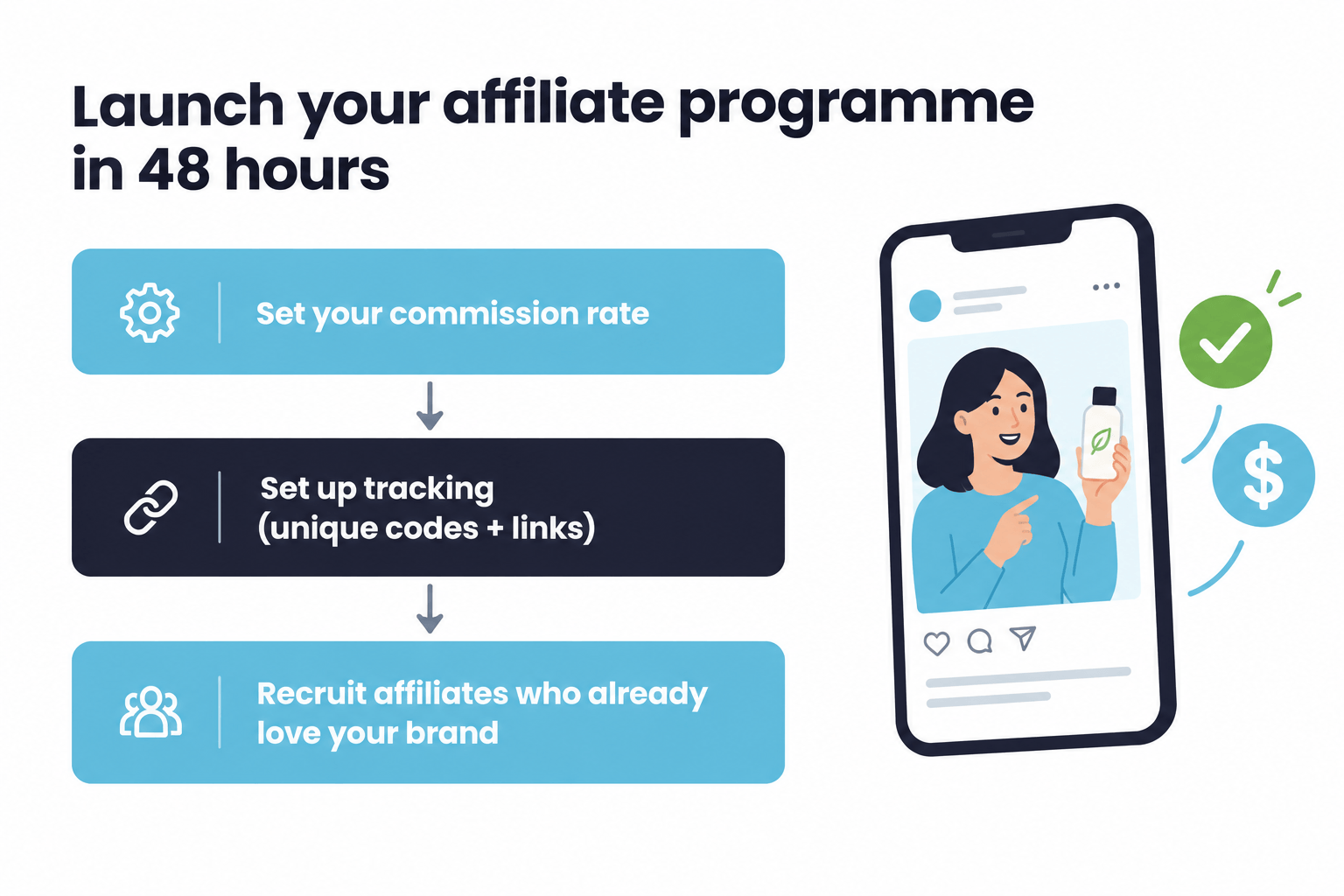
Every influencer should have a unique discount code or affiliate link that allows you to attribute sales directly. This isn’t just about measurement—it also motivates influencers to create content that drives results, particularly in affiliate campaign structures.
Combine campaign types for maximum reach
Running gifted and affiliate campaigns simultaneously maximises both the volume of content created and the direct revenue potential. Brands that combine multiple campaign types consistently see higher influencer application rates and stronger overall results.
Repurpose your best-performing content
Don’t let high-quality influencer content sit unused after a campaign ends. The top-performing UGC from your influencer campaigns can be repurposed into paid ads, email campaigns, product pages and organic social posts—significantly extending the return on your original investment.
Build for the long term
Some of the most successful influencer marketing strategies involve building ongoing relationships with creators rather than running one-off campaigns. Influencers who genuinely use and believe in your product deliver more authentic content and maintain stronger conversion rates over time. For more on this approach, read How to Build Long-Term Influencer Partnerships (Beyond One-Off Collabs).
What Brands Are Saying About Referwo
The results speak loudest from the brands themselves. Max from Thread the Word describes how Referwo made scaling effortless—watch the Thread the Word video testimonial. Tayla from Zoe & Sage shares a similar experience in her video testimonial.
You can also explore verified brand reviews from Sole Sox, Cherub Baby, Zoe & Sage and more—or read Trustpilot reviews from brands like Leah Toth and Max Pondevida.
The Bottom Line
The impact of influencer marketing on sales is no longer speculative—it’s measurable, replicable and growing.
The surprising part isn’t that influencer marketing drives sales. It’s how dramatically it can outperform expectations when brands have the right platform, the right measurement tools, and the right creators working for them.
For e-commerce brands ready to move from guesswork to guaranteed results, Referwo provides everything needed to launch, manage and track influencer campaigns from one central platform—with no agency fees and full transparency over every dollar spent.
Explore what’s possible: view all brand case studies, check out Referwo’s pricing plans, or start your free 14-day trial today. Or book a 15 mins demo so we can show you how we can help you scale your business through influencer marketing https://calendly.com/referwo/platformdiscoverymeeting